
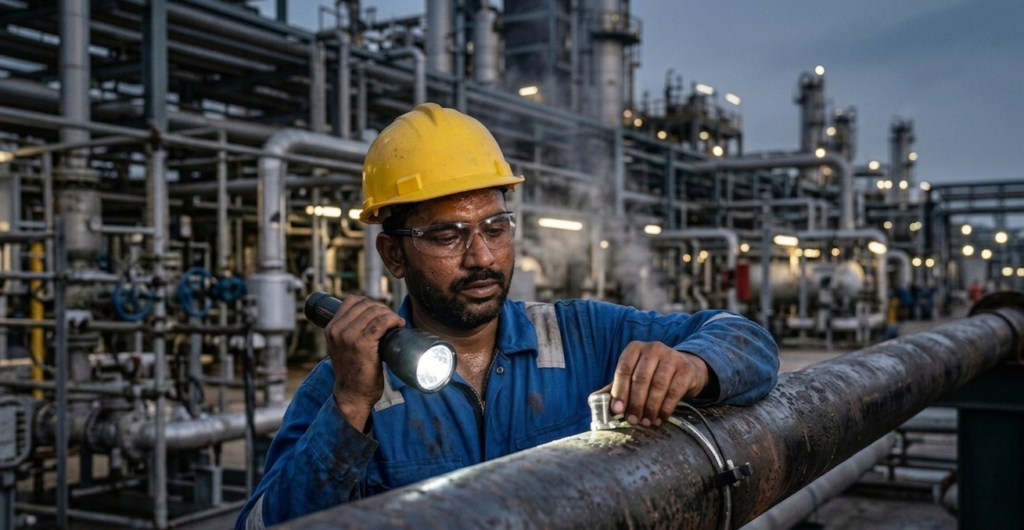
Ms seamless pipes in salem are the backbone of modern industrial infrastructure. Whether you are operating a power plant in Mettur or a textile processing unit in Tiruppur, the reliability of your piping system is non-negotiable. Unlike welded pipes, a mild steel seamless pipe is manufactured through a piercing process that eliminates the longitudinal seam. This makes it significantly stronger and better suited for high-temperature and high-pressure environments. However, even the highest grade seamless pipes can encounter issues during storage, installation, or operation.
Understanding how to identify and fix these troubles on-site can save your project from expensive downtime and safety hazards. Here is a detailed look at the five most common troubles and their professional solutions.
1. Surface Pitting and Atmospheric Corrosion
Even though a mild steel seamless pipe is known for its durability, it is still susceptible to oxidation. If pipes are stored in open yards near coastal areas or high-humidity zones like Trichy, they can develop surface pitting. Pitting is particularly dangerous because it creates small holes that can eventually lead to pinhole leaks under high pressure.
To fix surface corrosion, engineers must first perform a “Visual Inspection and Pit Depth Measurement.” If the pitting depth is within the allowable limit of the pipe’s wall thickness (usually 12.5 percent of the nominal wall), the surface can be restored. Use a power wire brush or sandblasting to remove all rust until the “white metal” is visible. Immediately after cleaning, apply a high-quality zinc-rich primer or an epoxy coating to prevent further oxygen contact. For pipes used in chemical environments, a coal tar enamel coating is often the best choice for long-term protection.
2. Dimensional Inaccuracies and Ovality
When working with large diameter MS seamless pipes in salem, site engineers often find that the pipe ends are not perfectly round. This is known as ovality. This trouble usually occurs during heavy handling or improper stacking at the site. If the pipe is out of round, it becomes nearly impossible to achieve a perfect butt-weld joint, leading to weak spots in the pipeline.
For minor ovality, a hydraulic pipe expander or a “rounding clamp” can be used on-site to push the pipe walls back into the correct circular shape. If the pipe wall is very thick, such as SCH 80 or SCH 160, you may need to apply gentle, controlled heat to the area before using the clamp. Always ensure that the temperature does not exceed the critical limit of the steel to avoid changing its grain structure. Using internal line-up clamps during the welding process is the most effective way to manage dimensional variations during installation.
3. Weldability Issues and Improper Edge Preparation
One of the most frequent complaints on-site is “root cracking” or “porosity” during the welding of mild steel seamless pipes. This is rarely a fault of the steel itself but is often caused by moisture or impurities trapped in the bevel area. Since seamless pipes are often coated with a layer of varnish or “mill oil” to prevent rust during transit from Coimbatore to your site, this oil can contaminate the weld pool if not removed.
The secret to a perfect weld on seamless pipes is meticulous edge preparation. Use a portable beveling machine to create a clean 37.5 degree angle on the pipe ends. Ensure that at least 25mm of the area surrounding the joint is cleaned with a solvent to remove all oils and grease. If you are working in a damp environment, use an oxy-acetylene torch to “pre-heat” the joint area to approximately 100 degrees Celsius. This drives out moisture and prevents hydrogen-induced cracking, ensuring a high-strength joint that meets IBR standards.
4. Internal Scaling and Mill Scale Blockages
During the hot-rolling process of manufacturing mild steel seamless pipes, a thin layer of iron oxide called “mill scale” forms on the internal surface. Over time, in high-velocity steam or water lines, this scale can peel off and clog sensitive valves, pumps, or spray nozzles. This is a major concern for the pump and valve industry in Coimbatore.
For pipes already installed, “System Flushing” is the most common remedy. However, for a more thorough fix before commissioning, mechanical descaling using a “pipe pig” or a rotary wire brush tool is recommended. If the scale is stubborn, a mild chemical pickling solution can be circulated through the pipes followed by a neutralizing flush. This ensures that the internal bore is smooth, reducing friction loss and protecting your expensive downstream equipment from damage.
5. Improper Handling Damage (Dents and Gouges)
During the transportation of mild steel seamless pipes from the warehouse to a remote project site in Salem or Trichy, pipes can suffer from mechanical damage. Deep gouges or dents act as “stress concentrators.” Under the constant vibration and pressure of an operating plant, these small dents can become the starting point for a catastrophic pipe burst.
Every dent must be measured. According to most engineering codes, a dent that exceeds 6 percent of the pipe diameter or contains a scratch or gouge must be addressed. If the damage is at the end of the pipe, the best fix is to “crop” or cut off the damaged section and re-bevel the end. If the damage is in the middle of a long span, a “full-encirclement repair sleeve” can be welded over the area to reinforce the pipe wall. Never attempt to “hammer out” a dent, as this causes work-hardening and makes the steel brittle.
Why “On-Site” Fixes Matter
When we talk about an “On-Site Fix,” we are not suggesting “quick and dirty” repairs. In the context of MS Seamless Pipes, on-site fixes are about Stabilization and Safety.
For a refinery in Manali or a shipbuilder in Chennai, stopping a line for one hour can cost lakhs in production. By using techniques like Composite Wrapping or Pit Blending, you are essentially performing “Industrial First Aid.” These methods prevent the “trouble” from escalating into a “failure.” However, always ensure that any repair on an IBR (Indian Boiler Regulations) certified line is documented and eventually inspected by a qualified authority to remain legally compliant.
Keywords to Remember:
- MS Seamless Pipes
- On-site Pipe Repair
- Boiler Tube Maintenance
- Corrosion in Power Plants
- Mild Steel Pipe Troubles
- IBR Compliance Tamil Nadu
- Pipe Ovality Fix
Are you facing a persistent issue with your industrial piping system? Don’t wait for a minor leak to become a major shutdown. Our team of experts specializes in IBR Certified MS Seamless Pipes and can provide the technical guidance you need to keep your plant running safely.
Contact our Blackbuild Tech Today for a professional site assessment or a quote on high-grade replacement pipes.
Frequently Asked Questions
Can I weld an MS Seamless pipe while it is leaking?
No. Never attempt to weld on a live, leaking pipe. The internal pressure can cause the weld pool to blow out, leading to severe injury. The system must be depressurized and drained first.
How deep can a scratch be before the pipe is considered “scrap”?
Generally, if a scratch or gouge exceeds 10% to 12.5% of the nominal wall thickness, the pipe may be rejected or require a “cut-and-replace” repair according to ASME standards.
What is the best way to prevent rust on MS pipes stored at site?
Keep pipes off the ground using wooden sleepers and cover them with a tarpaulin. Ensure the ends are capped to prevent moisture and “salty air” from entering the internal bore.
Is a pipe clamp a permanent fix for a leak?
In most industrial codes, a mechanical clamp is considered a “temporary repair.” It should be replaced with a welded “patch” or a new section of pipe during the next scheduled shutdown.
Why do seamless pipes get “pitting” faster than uniform rust?
Pitting usually occurs due to “localized” attacks, often caused by a drop of chemical or a high concentration of salt sitting on one spot. It is more dangerous because it thins the wall in one specific point very quickly.
Can I use a regular MS pipe for high-pressure steam?
No. For high-pressure steam, you must use IBR Certified MS Seamless Pipes (like ASTM A106 Grade B). Regular MS pipes may have a seam that can fail under thermal stress.
How do I fix a pipe that is slightly “oval”?
You can use a hydraulic expander for internal correction or a “clamping bridge” on the outside to force the pipe into alignment before welding.
What is “Chemical Descaling” for boiler tubes?
It involves flushing the pipes with a diluted acid (like HCl with inhibitors) to dissolve mineral deposits. It must be followed by a “neutralizing” flush to prevent the acid from eating the steel.
Does IBR allow for composite resin repairs?
IBR is very strict. While a resin wrap can stop a leak in an emergency, the authorities will usually require a permanent welded repair by a certified IBR welder for long-term compliance.
How often should MS Seamless pipes be inspected?
In power plants and refineries, a visual inspection should be done monthly, with ultrasonic thickness testing (UT) performed annually or during every major shutdown.
Related posts:
 ASTM A106 vs ASTM A53 for High Pressure Boilers and Mild Steel Seamless Pipes
 IBR Certified MS Seamless Pipes Understanding Safety Standards for Tamil Nadu Power Plants
 Why Mild Steel Seamless Pipes are the Gold Standard for High-Temperature Steam Lines in TN Industries
 The Role of MS Seamless Pipes in Oil Refineries Safety Standards Every Worker Should Know