
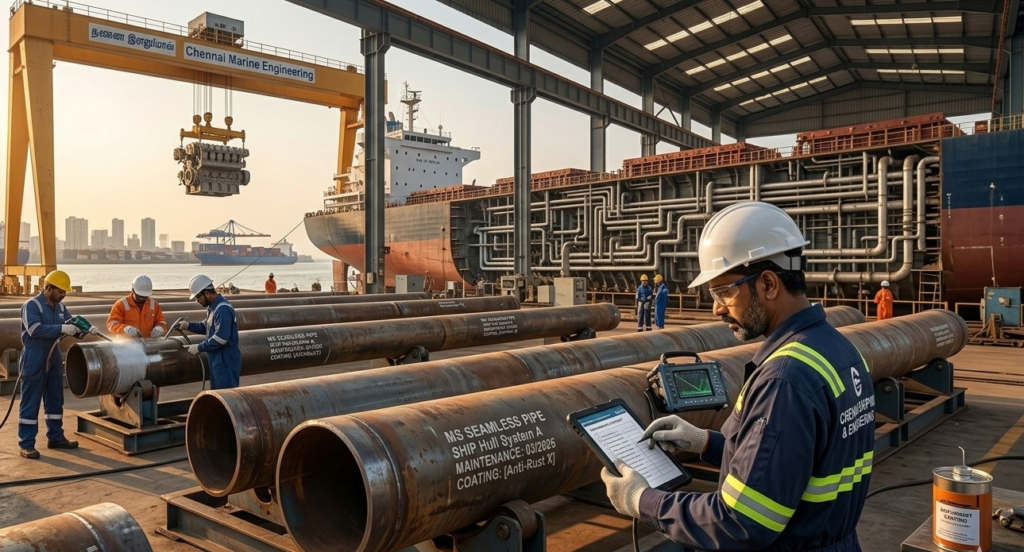
Ships operate in some of the harshest environments on earth. Constant exposure to salt water, humidity, and high pressure makes the durability of a piping system a top priority. For shipbuilders, the seamless pipe is a vital component. Because these pipes have no welded seams, they offer superior strength. However, even the strongest seamless pipes require a strict maintenance schedule to prevent failure at sea.
To keep these pipes in top shape, crews focus heavily on corrosion control. Saltwater is incredibly aggressive, so seamless pipes are often galvanized or coated with special protective layers. Even though the pipe itself is one solid, strong piece, the external surface must be regularly inspected for “pitting” tiny holes caused by salt that could eventually eat through the metal if left untreated.
Beyond surface rust, maintenance also involves checking the vibration and pressure levels within the system. Because ships are constantly moving and engines are always vibrating, pipes can experience a lot of physical stress. Engineers perform routine pressure tests and check the support brackets to ensure that the seamless pipes remain perfectly aligned, preventing any cracks from forming during a long voyage across the ocean
The Importance of MS Seamless Pipes in Shipbuilding
Shipbuilders prefer a mild steel pipe because it can handle extreme internal pressures from hydraulic systems and fuel lines. Unlike welded pipes, a seamless pipe has a uniform structure. This means there are no weak joints that could burst under the stress of heavy waves or engine vibrations. Keeping these pipes in top condition is essential for the safety of the vessel and its crew.
In addition to high pressure, these pipes must survive the constant “flexing” of a ship’s hull. As a vessel moves through heavy seas, the entire structure bends and twists; a seamless pipe is ideal here because it doesn’t have a longitudinal weld that could crack under this repetitive mechanical stress. This uniform strength ensures that vital fluids, like fuel and oil, keep flowing to the engines even in the middle of a storm.
To maximize the life of these pipes, shipbuilders often use galvanized coatings or specialized paints to block out the corrosive sea air. Regular maintenance involves “ultrasonic testing,” where technicians use sound waves to check the thickness of the pipe walls from the outside. By catching thin spots early, the crew can replace a section of pipe during a scheduled port stay rather than dealing with a dangerous leak in the middle of the ocean.
Step-by-Step Maintenance Guide for Shipbuilders
1. Initial Inspection Before Installation
Maintenance starts the moment the mild steel seamless pipes arrive at the shipyard. You must check for surface rust or pitting caused during transport. Ensure the pipe ends are capped to prevent moisture and debris from entering the bore. Any small scratch on a seamless pipe can become a starting point for corrosion once the ship is in the water.
2. External Coating and Painting
The primary defense against the ocean is a high-quality coating. For shipbuilders, this usually involves a marine-grade epoxy or zinc-rich primer. Since a ms pipe is made of carbon steel, it will oxidize quickly when exposed to salt air. Applying multiple layers of protective paint ensures that the metal stays dry and protected from the corrosive marine atmosphere.
3. Internal Cleaning and Flushing
The fluids inside the pipes can be just as damaging as the sea outside. Fuel lines, ballast water lines, and fire mains must be flushed regularly. For ms pipes, it is important to remove any scale or sediment that could cause “under-deposit corrosion.” Using chemical inhibitors in the water can help form a protective film inside the mild steel seamless pipe.
4. Ultrasonic Thickness Testing (NDT)
You cannot always see the damage inside a pipe. Shipbuilders use Non-Destructive Testing (NDT), specifically ultrasonic thickness gauging. This allows maintenance teams to measure the wall thickness of the seamless pipe without cutting it. If the pipe wall becomes too thin due to corrosion, it must be replaced before it fails under pressure.
5. Managing Marine Growth
Pipes used for sea-water intake often suffer from biofouling. Barnacles and algae can grow inside the mild steel seamless pipes, causing blockages and increased pressure. Implementing an Electrolytic Anti-Fouling system can help protect your mild steel pipes from these biological threats.
Why Regular Maintenance Saves Money
Replacing a ms pipe while a ship is at sea is nearly impossible and very dangerous. Proactive maintenance during dry-docking is much cheaper than emergency repairs. By taking care of your ms seamless pipes, you extend the life of the vessel and reduce the risk of environmental leaks or mechanical breakdowns.
Shipbuilders Maintenance Checklist
To ensure the longevity of your piping systems, follow this detailed checklist designed specifically for maritime environments.
Daily and Weekly Routine Checks
- Visual Leak Detection: Walk the length of accessible MS pipes to look for “weeping” joints or salt crusts.
- Vibration Monitoring: Ensure that pipe hangers and supports are tight. Excessive vibration in a mild steel pipe can lead to stress corrosion cracking near the flanges.
Monthly Technical Reviews
- Cathodic Protection Inspection: If the pipes are part of a system using sacrificial anodes, check the depletion rate of the anodes.
- Coating Integrity: Look for “holidays” (gaps) in the paint. If any rust is visible on the ms seamless pipe, it must be wire-brushed and spot-primed immediately to prevent “under-film” corrosion.
Annual and Dry-Dock Requirements
- Internal Scoping: Use borescope cameras to inspect the internal condition of critical mild steel seamless pipes, such as fire mains and fuel transfer lines.
- Pressure Testing: Conduct hydrostatic tests to ensure the seamless pipes can still handle 1.5 times their rated operating pressure.
A mild steel seamless pipe is an engineering marvel that provides the strength needed for modern shipping. However, the marine environment is relentless. For shipbuilders and vessel owners, a disciplined maintenance plan is the only way to ensure these ms pipes perform reliably for decades. From proper coatings to regular thickness testing, every step you take today prevents a crisis tomorrow.
Secure Your Ship with High-Quality Piping
Are you looking for durable ms pipes for your next shipbuilding project? We supply premium mild steel pipes that meet international maritime standards. Our team can also advise on the best coating and maintenance practices for your specific needs.
Contact Black Buildtech today to get a quote and ensure your fleet is built to last.
Frequently Asked Questions
Why use a MS seamless pipe instead of a welded one on a ship?
A MS seamless pipe has no joints, making it much stronger and more resistant to the vibrations and high pressures found in marine engines and hydraulic systems.
How often should ship pipes be inspected?
Critical systems should have a visual check weekly. A full technical inspection including thickness testing is usually done every year or during dry-docking.
What is the best way to prevent rust on a mild steel seamless pipe?
Applying a marine-grade epoxy coating and using sacrificial anodes (cathodic protection) are the most effective ways to stop rust.
Can I use mild steel seamless pipes for seawater cooling?
Yes, but they must be properly lined or treated with anti-corrosive chemicals to handle the salt water.
What causes a MS seamless pipe to fail?
The most common causes are internal corrosion, external rust from salt spray, and physical damage from heavy vibrations.
Is it easy to replace a mild steel seamless pipe on a vessel?
It is easier than replacing large structural parts, but it still requires specialized welding and pressure testing once the new pipe is installed.
Does the wall thickness of a MS seamless pipe matter?
Absolutely. The thickness determines the pressure rating. If corrosion thins the wall, the pipe may burst.
What is the difference between a MS seamless pipe and a galvanized pipe?
A galvanized pipe has a zinc coating to prevent rust. Many shipbuilders buy standard MS seamless pipes and apply specialized marine coatings themselves.
How do you clean the inside of a mild steel seamless pipe?
Technicians use high-pressure water jetting or chemical flushing to remove salt, scale, and biological growth.
Where can I find the standards for marine pipes?
Most shipbuilders follow standards from organizations like the American Bureau of Shipping (ABS) or Lloyd’s Register.
Related posts:
 Essential Maintenance Tips for Mild Steel Seamless Pipes in Chemical Factories Preventing Acidic Corrosion
 ASTM A106 vs ASTM A53 for High Pressure Boilers and Mild Steel Seamless Pipes
 Why Mild Steel Seamless Pipes are the Gold Standard for High-Temperature Steam Lines in TN Industries
 How to Select Wall Thickness (SCH 40/80) for Mild Steel Seamless Pipes in Coimbatore