
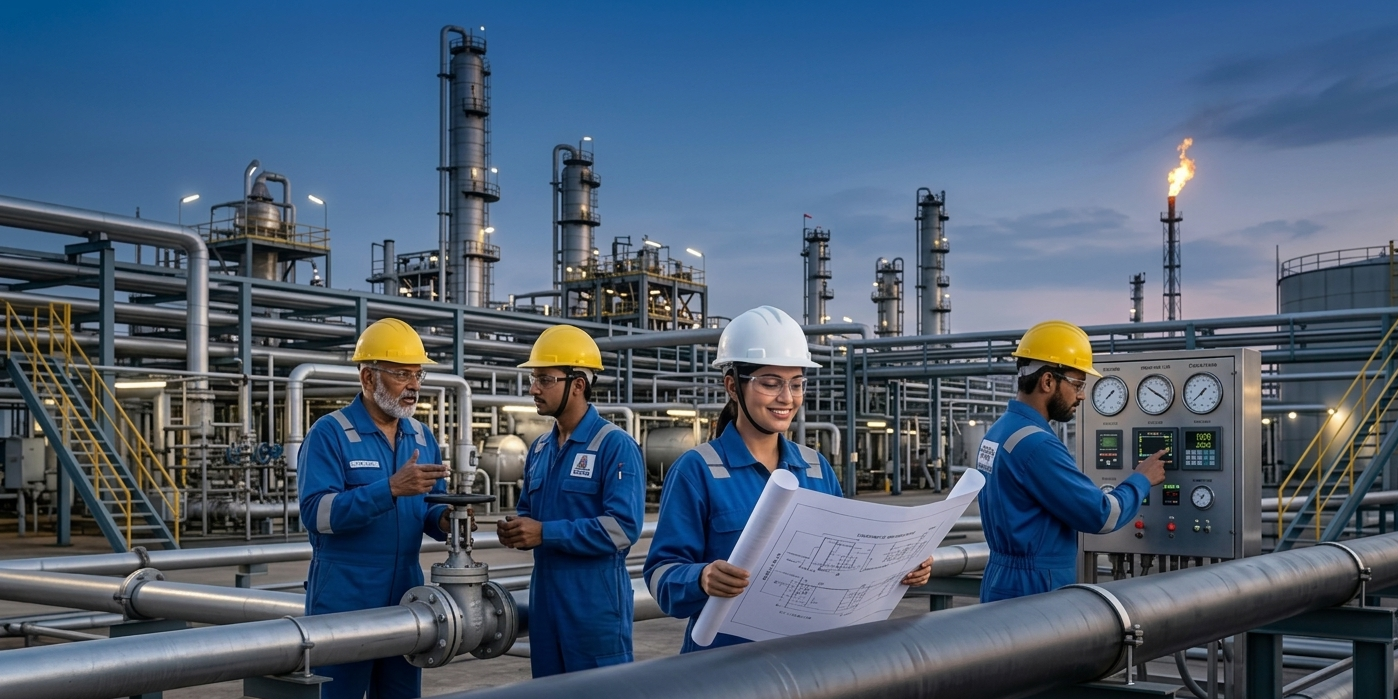
In the world of oil and gas processing, there is zero room for error. An oil refinery is a complex network of high-pressure vessels, volatile chemicals, and extreme temperatures. At the heart of this industrial labyrinth lies a critical component that often goes unnoticed until something goes wrong: the piping system. Specifically, the use of seamless pipe is not just a structural choice; it is a fundamental safety requirement. Understanding why seamless pipes are preferred over welded alternatives is vital for every engineer, technician, and safety officer on-site. This guide explores the engineering behind mild steel pipe and the rigorous safety standards that keep the facility running without incident. Why “Seamless” is Non-Negotiable in Refineries The primary difference between a welded pipe and an MS seamless pipe is the absence of a longitudinal seam. Welded pipes are made by rolling a flat plate and joining the edges. In contrast, a seamless pipe is manufactured through a process called extrusion, where a solid billet is pierced to create a hollow tube. Strength Under Pressure The seam in a welded pipe is traditionally its weakest point. Under the intense hydraulic pressures found in refinery “cracker” units, a seam represents a potential failure line. Because ms seamless pipes have a uniform crystalline structure throughout their circumference, they offer a higher safety margin. They can withstand significantly higher internal pressures without the risk of splitting. Resistance to Corrosion Oil refineries deal with “sour” crude and corrosive chemicals. In welded pipes, the heat-affected zone (HAZ) near the weld is often more susceptible to corrosion. By using mild steel pipes, refineries eliminate this localized vulnerability, ensuring that the pipe wall thins at a predictable, uniform rate. Key Applications of Mild Steel Seamless Pipes In a refinery, different sections require different material properties. However, seamless pipe is the “workhorse” of the facility due to its versatility and cost-effectiveness. Safety Standards and Certifications Safety in a refinery is governed by strict international codes. For a worker, knowing the “language” of these pipes can save lives. ASTM A106 and API 5L These are the two most common specifications you will see stamped on an MS pipe. Schedule and Pressure Ratings The “Schedule” of a pipe (e.g., Sch 40, Sch 80) refers to its wall thickness. A higher schedule means a thicker wall. Safety protocols dictate that workers must verify the schedule of the MS pipe before it is installed in a high-pressure line. Installing a Sch 40 pipe where a Sch 160 is required is a recipe for a catastrophic blowout. Identifying the Risks of Substandard Piping Using an inferior or incorrect mild steel pipe can lead to “Loss of Primary Containment” (LOPC). This is the industry term for a leak or rupture. Maintenance and Inspection Protocols Even the highest quality ms seamless pipes require regular “health checks.” Every worker should be aware of the common inspection methods: Non-Destructive Testing (NDT) NDT allows inspectors to check the internal health of a pipe without cutting it open. Visual Checks for Workers While the engineers handle NDT, every worker can perform basic visual checks: The Economic and Human Impact of Pipe Safety The cost of a high-quality MS pipe is higher than a welded one, but the return on investment is measured in lives saved and avoided downtime. A single pipe failure can lead to an emergency shutdown (ESD), costing a refinery millions of dollars per day. More importantly, it can lead to environmental disasters and loss of life. By adhering to the standards of mild steelpipes, refineries ensure that their most valuable asset (their workforce) is protected from the inherent dangers of the oil and gas industry. A Culture of Safety The role of ms pipes in oil refineries is foundational. From their superior manufacturing process to their ability to withstand the harshest conditions on Earth, these pipes are the unsung heroes of industrial safety. For the worker on the ground, understanding the specs, recognizing the stamps of ASTM/API, and maintaining a vigilant eye for corrosion are the best ways to ensure a safe working environment. When we respect the materials we work with, we ensure that everyone goes home safe at the end of their shift. If you want more about safety in the oil and gas industry Check out the Video which begins with quality materials and informed workers. If you are responsible for procurement or maintenance in a refinery, always ensure your MS Pipes come with genuine IBR and MTC (Mill Test Certificate) documentation. Contact our technical consultants today for a complete guide on IBR-compliant piping solutions for the oil and gas sector. 10 Frequently Asked Questions (FAQs) 1. Why are seamless pipes used in oil refineries instead of welded pipes? Seamless pipes have no joints or welds, which makes them much stronger and more resistant to high pressure and leaks. This is vital for transporting flammable hydrocarbons safely. 2. What is the most common pipe grade used in refineries? ASTM A106 Grade B is the industry standard for high-temperature carbon steel seamless pipes in refineries and petrochemical plants. 3. What does IBR mean in the context of Indian refineries? IBR stands for Indian Boiler Regulations. While it primarily covers steam lines, many refinery pipes also fall under IBR if they are connected to steam generation or high-pressure systems. 4. What is OISD-STD-130? It is the standard for the inspection of piping systems in the Indian oil industry. It provides guidelines on how often and by what methods refinery pipes should be checked for safety. 5. How does salt air in Tamil Nadu affect MS Seamless pipes? Salt air causes rapid external corrosion (rusting). In coastal refineries, pipes need frequent painting and ultrasonic thickness checks to ensure the salt hasn’t thinned the metal walls. 6. Can MS pipes handle toxic gases like Hydrogen Sulfide (H2S)? Yes, but they often require “NACE” certification (MR0175) to ensure the steel is resistant to “Sour Gas” cracking, which is a common hazard in refineries. 7. What is “Wall Thinning” and
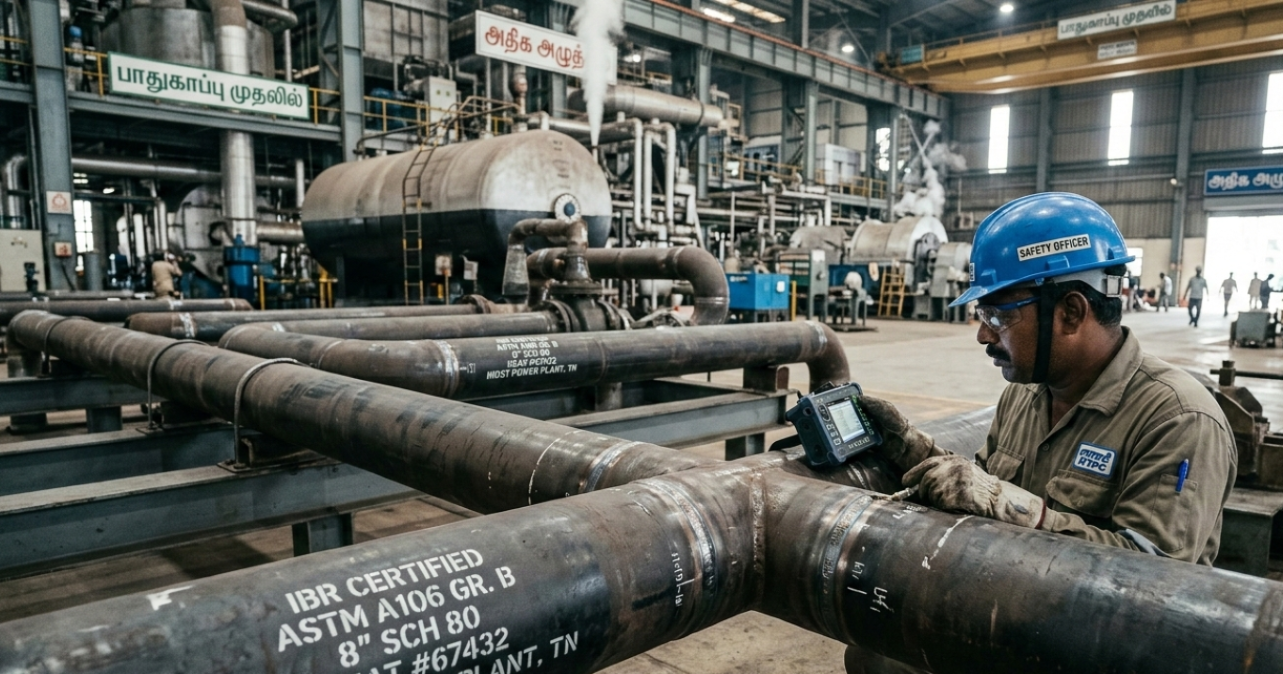
IBR Certified MS Seamless Pipes Understanding Safety Standards for Tamil Nadu Power Plants
The energy sector in Tamil Nadu stands as a powerhouse of industrial growth. From the massive thermal units in Ennore and Thoothukudi to the growing captive power plants in the textile and cement belts, the demand for high-performance infrastructure is constant. At the heart of these facilities lies a complex network of piping designed to transport steam and water under extreme conditions. Among these, IBR Certified MS Seamless Pipes are the most critical components. Understanding the safety standards surrounding these pipes is not just a technical necessity but a legal obligation under the Indian Boiler Regulations (IBR). This guide provides an in-depth look at why these pipes are the backbone of power plant safety in Tamil Nadu. What are IBR Certified MS Seamless Pipes? Mild Steel (MS) Seamless Pipes are manufactured through a process that involves heating a solid round billet and then piercing it to create a hollow tube. Unlike welded pipes, which have a longitudinal seam, seamless pipes have a uniform structure throughout. When these pipes are IBR Certified, it means they have been manufactured, tested, and inspected according to the rigorous standards set by the Central Boilers Board of India. For a pipe to be “IBR,” it must be able to withstand the specific design pressure and temperature of the boiler system it integrates with. The Importance of “Seamless” in High-Pressure Systems In a power plant, steam is often transported at pressures exceeding 100 kg/cm² and temperatures above 400°C. A welded pipe has a “weak point” at the seam where the metal was joined. Under extreme thermal expansion and high pressure, these seams are prone to failure. Seamless pipes eliminate this risk by providing: The Legal Landscape: Tamil Nadu Boiler Directorate The Tamil Nadu Boiler Directorate is the state-level authority responsible for enforcing the Boilers Act, 1923 and IBR 1950. Every piece of piping used in a steam-generating system in the state must be registered with and inspected by this department. Operating a power plant with non-IBR pipes is a criminal offense. More importantly, it invites the risk of catastrophic boiler explosions. The Directorate ensures that every pipe used has a valid Form III-A (for pipes) or Form III-C (for fittings), which acts as a birth certificate for the material, detailing its chemistry, strength, and the name of the approved inspecting authority. Why IBR Certification is the Gold Standard for Safety 1. Material Traceability Every IBR pipe is stamped with a unique heat number. This allows engineers to trace the pipe back to the specific batch of steel used. If a defect is found, the entire batch can be identified and replaced before a failure occurs. 2. Rigorous Testing Requirements To receive IBR certification, MS Seamless pipes must undergo: 3. Preventing “Creep” and Fatigue In power plants, pipes are subjected to constant heating and cooling. Over time, this leads to “creep” , a slow deformation of the metal. IBR standards dictate the use of specific grades, like ASTM A106 Grade B, which are specifically engineered to resist creep at high temperatures. Common Material Grades Used in Tamil Nadu Power Plants While “MS” is a broad term, specific grades are mandated based on the application: The Challenges of the Tamil Nadu Climate Power plants in Tamil Nadu face unique environmental challenges. The high humidity and salinity in coastal areas like Nagapattinam can cause rapid external corrosion. IBR MS Seamless Pipes are often treated with anti-corrosive coatings like black bitumen or galvanization. However, the IBR regulations focus on the internal pressure-bearing capacity. Plant managers in TN must supplement IBR standards with robust external maintenance schedules to ensure the pipes do not thin out due to environmental factors. Documentation: Form III-A and III-C When you purchase IBR Certified pipes, they must be accompanied by original documents. Without these forms, the Tamil Nadu Boiler Inspector will not grant the “Fitness Certificate” required to start the boiler. Ensuring Quality: How to Verify Your IBR Pipes The Financial Impact of Compliance While IBR certified pipes carry a premium price (often 15% to 25% higher than non-IBR pipes), the ROI is found in safety and insurance. Most industrial insurance providers in India will not cover a power plant unless all steam-bearing components are IBR compliant. One day of unplanned shutdown due to a pipe burst can cost a TN power plant millions in lost revenue, far exceeding the initial cost of certified materials. Are you planning a boiler overhauling or a new piping installation for your power plant in Tamil Nadu? Ensure your facility remains safe and legally compliant by sourcing only genuine IBR Certified MS Seamless Pipes. Contact our Black Buildtech team today for a Detailed Consultation on IBR compliance and material selection for your specific industrial requirements. FAQs 1. What is the difference between IBR and non-IBR pipes? IBR pipes are manufactured and tested under the strict supervision of the Indian Boiler Regulations authorities. They are mandatory for any steam line where the pressure exceeds 3.5 kg/cm² or the internal diameter exceeds 10 inches. Non-IBR pipes do not undergo this government-mandated inspection and are used for water or air lines. 2. Is IBR certification mandatory for power plants in Tamil Nadu? Yes. Under the Boilers Act 1923, any steam pipe used in a power plant or industrial boiler system in Tamil Nadu must be IBR certified and registered with the State Boiler Directorate. 3. What material grade is best for IBR MS Seamless Pipes? ASTM A106 Grade B is the most widely used grade for high-pressure and high-temperature steam applications in Indian power plants due to its excellent durability and pressure-bearing capacity. 4. How can I identify a genuine IBR pipe? A genuine IBR pipe will have a hard-stamped mark containing the manufacturer’s name, the heat number, the inspector’s stamp, and the test pressure. It must also be accompanied by a Form III-A certificate. 5. Can I use welded pipes instead of seamless pipes for IBR applications? While IBR allows certain ERW (Electric Resistance Welded) pipes for specific low-pressure applications, “Seamless”
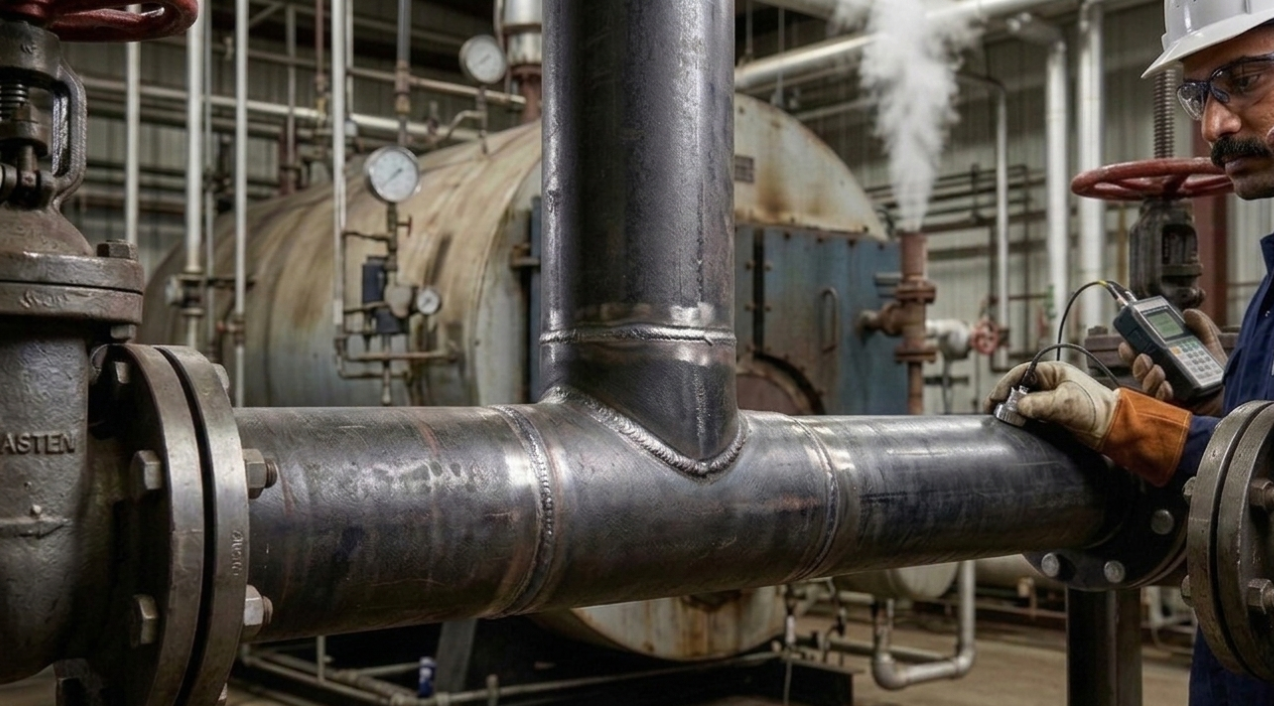
ASTM A106 vs ASTM A53 for High Pressure Boilers and Mild Steel Seamless Pipes
In the world of industrial piping, two standards dominate the market: ASTM A106 and ASTM A53. To a casual observer, these pipes might look identical. They are both black, cylindrical, and made of carbon steel. However, choosing the wrong one for a high-pressure boiler system isn’t just a financial mistake, it’s a major safety risk. This guide provides a deep-dive comparison between ASTM A106 and ASTM A53, specifically focusing on their roles in high-pressure boiler applications and mild steel seamless piping systems. 1. Understanding the Scope: What are A106 and A53? Before comparing them, we must understand what these standards were designed to do. What is ASTM A106? ASTM A106 is the “gold standard” for seamless carbon steel pipe for high-temperature service. If your application involves steam, water, or gas at temperatures reaching up to 750°F (400°C), A106 is the designated material. It is exclusively produced as a seamless pipe. What is ASTM A53? ASTM A53 is a general-purpose steel pipe specification. It covers seamless and welded (ERW) pipes. It is intended for mechanical and pressure applications but is typically used for lower-stress environments like air, water, and steam lines at ambient or moderate temperatures. 2. The Seamless Manufacturing Process (Exclusively A106) ASTM A106 is produced strictly through a MS seamless Pipe process. There are two primary methods used to achieve this “solid wall” integrity: Hot Piercing (The Mandrel Mill Process) In this method, a solid cylindrical steel bar (called a billet) is heated to roughly 1,200°C. A piercing mandrel (a pointed metal rod) is then forced through the center of the glowing billet while rollers rotate the steel. Extrusion For smaller diameters or complex alloys, the steel is pushed through a die. This ensures a very smooth internal surface, which is critical for reducing friction in high-velocity steam lines. 3. The Welded Manufacturing Process (Available in A53) ASTM A53 is often manufactured as a welded pipe (Type E or Type F). While cheaper, this process introduces a “heat-affected zone” (HAZ) along the length of the pipe. Electric Resistance Welding (ERW – Type E) This starts as a flat ribbon of steel (skelp) that is cold-formed into a cylindrical shape. High-frequency electrical current is then passed through the edges of the steel to fuse them together without using a filler metal. Furnace Butt-Welding (Type F) The steel is heated in a furnace and the edges are pressed together to create a weld. This is the lowest grade of piping and is never used for high-pressure steam or boilers. 4. Why “Seamless” A53 is Still Different from A106 You might ask: “If I buy ASTM A53 Type S (Seamless), isn’t it the same as A106?” Technically, the manufacturing method is the same, but the finishing is not: 5. Chemical Composition: The “Silicon” Factor In the metallurgy of carbon steel, the addition of specific elements changes how the metal behaves under extreme stress. While ASTM A106 and ASTM A53 Grade B share similar levels of Carbon and Manganese, the Silicon (Si) content is the critical divider. Why Silicon is Mandatory for High-Pressure Boilers ASTM A106 is a “Killed Steel.” During the melting process, Silicon is added as a deoxidizing agent to remove oxygen from the molten metal. Chemical Comparison Table Element ASTM A106 Grade B ASTM A53 Grade B Carbon (max) 0.30% 0.30% Manganese 0.29% – 1.06% 1.20% (max) Phosphorus (max) 0.035% 0.05% Sulfur (max) 0.035% 0.045% Silicon (min) 0.10% Not Required Key Takeaway: A106 has stricter limits on impurities like Phosphorus and Sulfur, leading to a “cleaner” and more reliable steel for critical applications. 6. Mechanical Properties: Strength Under Pressure When engineers design high-pressure boilers, they look at two critical numbers: Yield Strength (the point where the pipe permanently deforms) and Tensile Strength (the point where the pipe actually breaks). The Temperature Trap On paper, ASTM A106 Grade B and ASTM A53 Grade B have the same minimum requirements: However, these numbers are measured at 70°F (room temperature). In a high-pressure boiler, the temperature often exceeds 600°F. 7. Why A106 is the Choice for High-Pressure Boilers The ASME Boiler and Pressure Vessel Code (BPVC) is the “law” for high-pressure systems. In almost every high-stress section of a power plant or refinery, A106 is the mandatory selection. Here is why: A. Total Pressure Integrity Since A106 is 100% Mild steel seamless pipe, the pressure is distributed evenly against the walls. In a welded pipe (like A53 Type E), the weld seam is a “longitudinal stress point.” If the boiler experiences a pressure surge, a welded pipe is more likely to “split” along that seam. B. Superior Dimensional Tolerance High-pressure systems require precision welding between pipes and fittings (like elbows and tees). C. Resistance to Graphitization At long-term high temperatures, the carbon in some steels can turn into graphite, making the pipe as brittle as glass. The specific chemical makeup of A106 Grade B is designed to resist this transition, ensuring the pipe stays ductile (flexible) for decades. 8. Mild Steel Seamless Pipes: When to Use A53? It is important to clarify that ASTM A53 is not a “bad” pipe, it is simply a different tool for a different job. For many Mild Steel (MS) Seamless applications, A53 is actually the smarter choice because it saves money without sacrificing safety. Ideal Applications for A53: Choosing between ASTM A106 versus ASTM A53 comes down to your operating environment. If your project involves High-Pressure Boilers or temperatures above 400°F, ASTM A106 Grade B is the only safe and compliant choice. For general Mild Steel Seamless Pipe needs at room temperature or for structural use, ASTM A53 offers the best balance of strength and budget. Need high-quality ASTM A106 or A53 pipes for your next project? Don’t leave your safety to chance. Contact our technical sales team today for a quote or a free consultation on material selection. Frequently Asked Questions (FAQs) 1. Can I use ASTM A53 Grade B for a high-pressure boiler? Generally, no. Most engineering codes require A106 or specific boiler-grade tubes