
When it comes to industrial piping systems reliability is not optional. A pipe failure in an oil refinery, a power plant or a high pressure hydraulic system does not just cause project delays it causes safety risks, financial losses and operational shutdowns that can take weeks to recover from. This is why industrial buyers across construction, automotive, oil and gas and power generation consistently choose mild steel seamless pipes over other pipe types. The reliability of these pipes is not a marketing claim it is backed by the way they are manufactured, the way they perform under pressure and the way they hold up in the most demanding industrial environments. This blog breaks down exactly what makes mild steel seamless pipes a reliable choice for industrial use so you can make a confident and informed buying decision for your next project. What Makes Mild Steel Seamless Pipes Different from Other Pipes The Seamless Manufacturing Advantage The most fundamental difference between mild steel seamless pipes and other pipe types lies in how they are made. Seamless pipes are produced by extruding a solid steel billet through a piercing rod to create a hollow tube. There is no welding, no joining and no seam anywhere along the length of the pipe. This is in direct contrast to ERW pipes which are formed by rolling a steel strip into a cylindrical shape and welding the edges together. That weld seam, however carefully made, is always a potential weak point in the pipe structure. Why No Seam Means More Reliability In industrial applications where pipes carry high pressure fluids, gases or corrosive materials the weld seam in ERW pipes is the first point to show stress, fatigue or failure. Mild steel seamless pipes eliminate this risk entirely by having a uniform and continuous structure from end to end. This structural advantage is why engineers and project managers specify mild steel seamless pipes for critical industrial applications where failure is simply not an option. Strength and Pressure Handling Capacity How Mild Steel Seamless Pipes Handle High Pressure One of the most important reliability factors in industrial piping is pressure handling capacity. Mild steel seamless pipes are manufactured with uniform wall thickness throughout their entire length. This uniformity means the pipe handles pressure evenly without stress concentration points that could lead to failure. Here is a comparison of pressure handling between seamless and ERW pipes: Feature Mild Steel Seamless Pipes ERW Pipes Weld Seam None Present Wall Thickness Uniformity High Moderate Pressure Handling Capacity Higher Lower Stress Concentration Risk Minimal At weld seam Preferred for High Pressure Use Yes No Industries That Depend on This Strength The pressure handling reliability of mild steel seamless pipes makes them the preferred choice in: In all these applications the strength and pressure reliability of mild steel seamless pipes directly translates to operational safety and uptime. Corrosion Resistance and Durability in Industrial Environments How Mild Steel Seamless Pipes Perform in Harsh Conditions Industrial environments are tough on materials. Pipes are exposed to moisture, chemicals, extreme temperatures and mechanical stress on a daily basis. Mild steel seamless pipes are built to withstand these conditions with the right grade selection and surface treatment. Grade Selection for Industrial Durability Different grades of mild steel seamless pipes offer different levels of corrosion resistance and mechanical strength. Here is a quick reference: Grade Key Property Common Industrial Application IS 1239 General purpose Plumbing and water lines IS 3589 High strength Structural and pressure applications ASTM A106 High temperature Power plants and boilers ASTM A53 General and pressure Oil and gas pipelines Extending Pipe Life with Proper Coating The durability of mild steel seamless pipes in industrial environments can be significantly extended with the right surface coating. Common options include: Choosing the right grade and coating for your specific industrial environment is one of the most important reliability decisions you can make as a buyer. Dimensional Accuracy and Consistency Why Dimensions Matter in Industrial Piping In industrial piping systems pipes from multiple batches and suppliers often need to connect seamlessly with each other and with fittings, valves and flanges. If pipe dimensions are inconsistent even by a small margin installation problems, leaks and system failures can result. How Mild Steel Seamless Pipes Deliver Tighter Tolerances Because mild steel seamless pipes are formed from a single solid billet without any joining process they naturally achieve tighter dimensional tolerances than welded pipes. The outer diameter, wall thickness and inner diameter are more consistent batch to batch and along the entire pipe length. Here is how dimensional consistency impacts industrial reliability: Dimension Factor Impact on Industrial Use Consistent Outer Diameter Ensures proper fit with fittings and flanges Uniform Wall Thickness Delivers predictable pressure performance Accurate Inner Diameter Maintains consistent flow rates Straight Pipe Body Reduces installation stress and misalignment How Consistent Dimensions Reduce Project Delays When pipes arrive on site with consistent dimensions installation teams can work faster with fewer adjustments and corrections. This directly reduces labor costs and project timelines making mild steel seamless pipes a reliability asset not just in performance but in project execution as well. Wide Industrial Applications That Prove Their Reliability Industries That Trust Mild Steel Seamless Pipes The reliability of mild steel seamless pipes is proven by the sheer range of industries that depend on them every day: Industry Application Oil and Gas High pressure pipelines and flow lines Power Generation Steam lines and boiler tubes Construction Structural columns and load bearing frames Automotive Hydraulic and mechanical tubing Chemical Processing Corrosive fluid handling systems Water Treatment High pressure distribution lines How Reliable Supply Keeps Industrial Projects on Track Even the best pipe is only as reliable as its supply chain. Industrial projects run on tight schedules and a delay in pipe delivery can stall an entire project. This is where working with established mild steel pipe distributors and a trusted mild steel pipe supplier becomes critical. Reliable mild steel pipe distributors maintain consistent stock levels, offer flexible order quantities and provide accurate
What to Expect from MS Pipe Manufacturers Before You Order
Placing a bulk order for MS pipes without doing proper research is one of the most common and costly mistakes buyers make. Many contractors, builders and industrial buyers assume that all MS pipe manufacturers offer the same quality, pricing and service. That assumption leads to wrong material deliveries, project delays and budget overruns that could have been completely avoided. The truth is that not all MS pipe manufacturers operate the same way. Some carry IS certified stock while others do not. Some offer transparent pricing while others hide charges in the fine print. Some deliver on time while others keep you waiting for weeks. Knowing what to expect before you place your order puts you in complete control of your purchasing decision. This guide walks you through everything you need to evaluate, verify and confirm before ordering from any MS pipe manufacturer so that your project runs smoothly from day one. What MS Pipe Manufacturers Actually Do Before setting expectations it helps to understand what MS pipe manufacturers actually do and how they differ from dealers and traders in the supply chain. MS pipe manufacturers are companies that produce mild steel pipes directly from raw materials like steel billets and coils. They operate large scale production facilities with rolling mills, extrusion equipment and quality testing labs. The pipes they produce go through multiple stages of manufacturing before they are ready for supply including forming, sizing, heat treatment and surface finishing. Dealers and traders on the other hand purchase pipes from manufacturers and resell them. While dealers serve an important role in making pipes available locally, buying directly from MS pipe manufacturers often gives you better pricing, access to mill test certificates and the ability to place custom size orders. Understanding this distinction helps you ask the right questions when you contact a manufacturer. The best mild steel pipe suppliers in the market are those who either manufacture directly or maintain strong direct relationships with certified manufacturers ensuring consistent quality across every order. Product Range and Stock Availability to Confirm Before Ordering One of the biggest surprises buyers face after placing an order is discovering that the manufacturer does not have the exact size or grade they need in ready stock. Avoid this by confirming product range and availability before you commit. Size and Schedule Range Ask the manufacturer for a complete product catalogue covering all available sizes, outer diameters, wall thicknesses and schedule numbers. A manufacturer with a wide size range gives you the flexibility to source all your pipe requirements from a single supplier saving time and logistics cost. Ready Stock vs Made to Order Some MS pipe manufacturers carry ready stock for standard sizes while custom sizes are made to order with longer lead times. Confirm which category your requirement falls into before finalizing the order. Best mild steel pipe suppliers maintain adequate ready stock for the most commonly ordered sizes to ensure fast delivery. Minimum Order Quantity Most manufacturers have a minimum order quantity for bulk pricing. Clarify this before negotiating price so there are no surprises later. Top ms pipe manufacturers in coimbatore often offer flexible minimum order quantities for local buyers compared to national level manufacturers who may require larger commitments. Lead Time for Custom Orders If your project requires non standard sizes or special grades, confirm the lead time upfront. A reliable manufacturer will give you a realistic timeline and stick to it. Pricing Transparency to Verify Before You Commit Pricing is where many buyers get caught off guard. Here is how to ensure complete transparency before you place your order: Understand What Affects the Price MS pipe pricing is influenced by raw material costs, steel grade, wall thickness, order volume and current market rates. Ask your manufacturer to break down the price components so you understand exactly what you are paying for. Prices from top ms pipe manufacturers in coimbatore may vary from national manufacturers due to logistics and local market factors. Watch for Hidden Charges Some manufacturers quote a base price and add cutting charges, packaging charges, transportation charges and GST separately at the billing stage. Always ask for an all inclusive quotation before confirming your order to avoid budget surprises. Compare Multiple Quotations Never finalize an order based on a single quotation. Get at least three quotations from different MS pipe manufacturers and compare them on quality, grade, dimensions and total delivered cost, not just the base price per kg or per meter. Negotiate on Volume If you are placing a large order do not hesitate to negotiate. Best mild steel pipe suppliers and manufacturers typically offer better rates for bulk orders and long term buying relationships. Delivery Timelines and Logistics to Confirm Before Ordering Even the best quality pipes lose their value if they do not reach your site on time. Here is what to confirm about delivery before ordering: Realistic Delivery Timelines Ask the manufacturer for a confirmed delivery date in writing before placing your order. Reliable MS pipe manufacturers will commit to a specific timeline and have the logistics infrastructure to honor it. Be cautious of manufacturers who give vague delivery commitments. Packaging and Labeling Standards Confirm how the pipes will be packaged for transport. Proper bundling, end caps and labeling with size, grade and heat number protect the pipes during transit and make site management easier. This is a detail that best mild steel pipe suppliers never overlook. Transportation Responsibility Clarify whether the manufacturer handles transportation to your site or whether you need to arrange your own logistics. Some top ms pipe manufacturers in coimbatore offer doorstep delivery within the region which saves significant time and cost for local buyers. Damage and Shortage Policy Before ordering, ask the manufacturer what their policy is for pipes that arrive damaged or in short quantity. A reliable manufacturer will have a clear replacement or credit policy in place. How to Evaluate and Shortlist the Right MS Pipe Manufacturer With so many options available shortlisting the right manufacturer requires a
Why Mild Steel Pipe Standard Sizes Vary and How to Choose Correctly
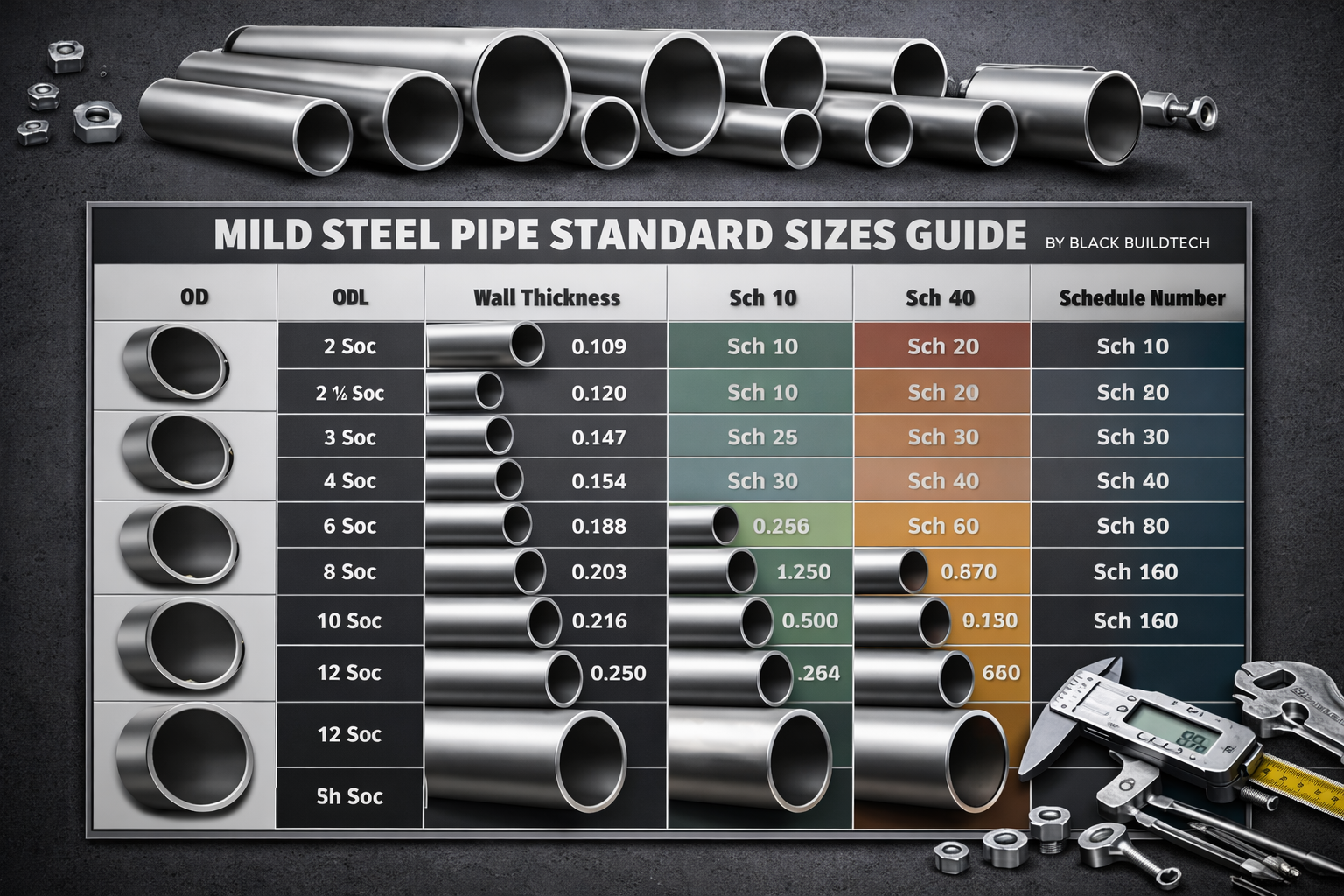
One of the most common challenges faced by contractors, builders and industrial buyers is choosing the right pipe size for their project. Walk into any pipe dealer and you will find dozens of sizes stacked side by side different diameters, different wall thicknesses, different schedules. If you have ever felt confused standing in front of that selection, you are not alone. Mild steel pipe standard sizes vary more than most buyers expect and that variation exists for very good reasons. The size that works perfectly for a plumbing line will not work for a high pressure hydraulic system. The diameter that suits a structural column will not suit a water distribution network. Understanding why these sizes vary and how to pick the right one can save you from costly project mistakes, material waste and unnecessary delays. This guide breaks down everything you need to know about mild steel pipe standard sizes, explains why the variation exists and gives you a practical framework for choosing the correct size every single time. What Are Mild Steel Pipe Standard Sizes Mild steel pipe standard sizes refer to the internationally and nationally accepted dimensions used to manufacture and supply MS pipes across industries. These dimensions include the outer diameter, inner diameter and wall thickness of the pipe, all of which are defined by specific standards and schedules. In India, mild steel pipes are manufactured according to IS 1239 and IS 3589 standards. These standards define the acceptable range of ms seamless pipe standard sizes in mm for different pressure classes and applications. The Bureau of Indian Standards sets these guidelines to ensure that pipes from different manufacturers are compatible and interchangeable on the same project site. The most commonly referenced dimensions in the market include the nominal bore size, which is an approximate measurement of the inner diameter, and the outer diameter which remains fixed for a given nominal size regardless of wall thickness. When you look at a ms seamless tube size chart, you will notice that for the same nominal bore, different schedules like Schedule 40 and Schedule 80 carry different wall thicknesses but the same outer diameter. This is one of the key reasons why mild steel pipe standard sizes can appear confusing at first glance; the nominal size does not always directly correspond to the actual measured diameter. Why Mild Steel Pipe Standard Sizes Vary The variation in mild steel pipe standard sizes is not random. It is driven by several well defined factors that reflect the diverse applications these pipes serve across industries. Application Requirements The most fundamental reason sizes vary is that different applications demand different performance. A pipe carrying low pressure water in a residential building does not need the same wall thickness as a pipe carrying high pressure steam in an industrial boiler system. Ms seamless pipe dimensions are designed to match the specific pressure, temperature and flow requirements of each application. IS and International Standards India follows IS standards for domestic pipe manufacturing but many industrial projects also specify ASTM, DIN or EN standards. Each standard defines its own range of ms seamless pipe standard sizes in mm which means the same nominal size can have slightly different dimensions depending on which standard is being followed. Schedule Numbers Schedule numbers indicate the wall thickness of a pipe relative to its outer diameter. A Schedule 40 pipe and a Schedule 80 pipe of the same nominal size will have the same outer diameter but different wall thicknesses and therefore different inner diameters. When you compare entries on a ms seamless tube size chart, you will see this clearly — higher schedule numbers mean thicker walls and smaller inner diameters. Manufacturing Process Seamless pipes and ERW pipes of the same nominal size can have slightly different ms seamless pipe dimensions due to the difference in manufacturing processes. Seamless pipes are produced by extruding a solid billet while ERW pipes are formed by rolling and welding a steel strip. This process difference can result in minor dimensional variations that matter in precision applications. Grade of Steel The grade of mild steel used also influences the available size range. Higher grade steel allows for thinner walls at the same pressure rating, which means ms seamless pipe size options differ based on the material grade specified for the project. Complete Size Chart for Mild Steel Pipes Here is a quick reference table for mild steel pipe standard sizes commonly available in the Indian market: Nominal Bore (mm) Outer Diameter (mm) Schedule 40 Wall Thickness (mm) Schedule 80 Wall Thickness (mm) 15 21.3 2.77 3.73 20 26.7 2.87 3.91 25 33.4 3.38 4.55 32 42.2 3.56 4.85 40 48.3 3.68 5.08 50 60.3 3.91 5.54 65 73.0 5.16 7.01 80 88.9 5.49 7.62 100 114.3 6.02 8.56 150 168.3 7.11 10.97 This ms seamless tube size chart covers the most frequently ordered sizes across construction, plumbing and industrial projects. For sizes beyond 150mm nominal bore, ms seamless pipe standard sizes in mm go up to 600mm and beyond depending on the manufacturer and application. When reviewing ms seamless pipe size options for your project, always refer to both the outer diameter and the wall thickness together rather than relying on the nominal bore alone. The nominal bore is simply a reference number and does not give you the complete picture of the pipe dimensions. How to Choose the Correct Mild Steel Pipe Size Choosing the right mild steel pipe standard size comes down to matching the pipe dimensions with the specific demands of your project. Here is a practical step by step approach: Step 1: Define Your Application Start by identifying what the pipe will carry water, gas, steam, oil or structural load. Each application has a recommended range of ms seamless pipe dimensions that are proven to perform safely and efficiently. Step 2: Determine the Pressure Requirements Once you know the application, identify the operating pressure. Higher pressure systems require thicker walls which means moving to a higher schedule
Why Every Buyer Should Know the MS Seamless Pipe HSN Code Before Filing GST
If you are a contractor, builder, or industrial buyer who purchases MS seamless pipes regularly, you already know how important it is to keep your GST filings accurate. But here is something most buyers overlook the MS seamless pipe HSN code. A small mistake in this eight digit number on your purchase invoice can trigger GST notices, input tax credit rejections, and unnecessary penalties that could have been easily avoided. Whether you are buying from ms seamless pipe suppliers for a large construction project or placing a small industrial order, knowing the correct HSN code before you file is not optional anymore. It is one of the smartest things any pipe buyer can do in 2026. This guide will walk you through everything you need to know so you never face a GST problem because of a wrong HSN code again. What Is an HSN Code and Why Should Pipe Buyers Care HSN stands for Harmonized System of Nomenclature. It is an internationally accepted system used to classify goods for taxation purposes. In India, the GST council uses HSN codes to identify products and apply the correct tax rate during billing and filing. For MS seamless pipe buyers, the HSN code appears on every purchase invoice issued by your ms seamless pipe suppliers. When you file your GST return, this code is what the tax department uses to verify whether the right tax rate was applied on your purchase. If the code on your invoice does not match the correct classification for MS seamless pipes, your input tax credit claim can get rejected. In some cases, you may also receive a GST scrutiny notice asking you to explain the mismatch. This is why every buyer whether a small trader or a large contractor must know and verify the MS seamless pipe HSN code before accepting any invoice. The Correct MS Seamless Pipe HSN Code Every Buyer Must Know The correct HSN code for MS seamless pipes falls under Chapter 73 of the HSN classification system, which covers articles of iron and steel. Here is the breakdown of the eight digit ms seamless pipe hsn code: For most standard MS seamless pipes used in construction and industrial applications, the HSN code 73049000 is widely used. However, for hydraulic and precision tubes, the classification may differ slightly. It is also important to understand the difference between ms seamless tube hsn code 8 digit and the pipe HSN code. While both fall under Chapter 73, tubes used for specific mechanical or hydraulic purposes may carry a different sub-heading. Always confirm with your ms seamless pipe suppliers which sub-heading applies to the exact product you are purchasing.The GST rate applicable on MS seamless pipes under this HSN code is 18%. This applies whether you are buying from a local dealer or a national level supplier. Common GST Filing Mistakes Buyers Make Without Knowing the HSN Code Most GST filing errors among pipe buyers happen not because of bad intentions but simply because of unawareness. Here are the most common mistakes buyers make when they do not know the correct ms seamless pipe hsn code: Using an outdated or incorrect HSN code Some buyers still use old four digit or six digit HSN codes on their invoices. From April 2021 onwards, businesses with an annual turnover above five crore rupees are required to use the full eight digit HSN code. Using a shorter code can lead to filing mismatches. Not verifying the HSN code with ms seamless pipe suppliers Many buyers simply accept whatever HSN code their supplier puts on the invoice without cross checking. If your supplier uses the wrong ms seamless pipe hsn, your input tax credit claim will be affected even though you did nothing wrong. Confusing ms seamless tube hsn code 8 digit with pipe codes Tubes and pipes are often used interchangeably in conversation but they carry different HSN sub-headings in some cases. Buyers who purchase both tubes and pipes must make sure the correct code is applied to each product separately. Applying the wrong GST rate Some buyers assume MS seamless pipes attract 12% GST when the correct rate is 18%. This leads to underpayment and subsequent notices from the GST department. Avoiding these mistakes starts with one simple habit always verify the HSN code before you accept an invoice from any ms seamless pipe suppliers. How to Verify the Right HSN Code Before You File Verifying the MS seamless pipe HSN code before filing your GST return is easier than most buyers think. Here is a simple process you can follow every time you make a purchase: Step 1: Check the GST portal Visit the official GST portal at gst.gov.in and use the HSN search tool. Enter keywords like seamless pipe or iron steel tube to find the correct classification and verify the eight digit code. Step 2: Ask your ms seamless pipe suppliers directly Before placing a bulk order, ask your supplier to confirm the HSN code they will use on the invoice. A reliable and experienced supplier like Black Buildtech will always provide GST ready invoices with the correct ms seamless pipe hsn code. Step 3: Cross check with your CA or tax consultant If you are filing large volume GST returns, it is always a good idea to have your chartered accountant verify the HSN codes on your purchase invoices at least once every quarter. Step 4: Maintain an HSN code reference list Create a simple reference document with the HSN codes for all the pipe products you regularly purchase. This saves time during filing and reduces the chance of errors. Step 5: Use GST compliant billing software Most modern billing software allows you to save HSN codes for recurring products. Once you enter the correct ms seamless pipe hsn code for the first time, it will auto populate on future invoices. Why Choosing the Right MS Seamless Pipe Suppliers Makes GST Filing Easier One of the most overlooked aspects of GST compliance is
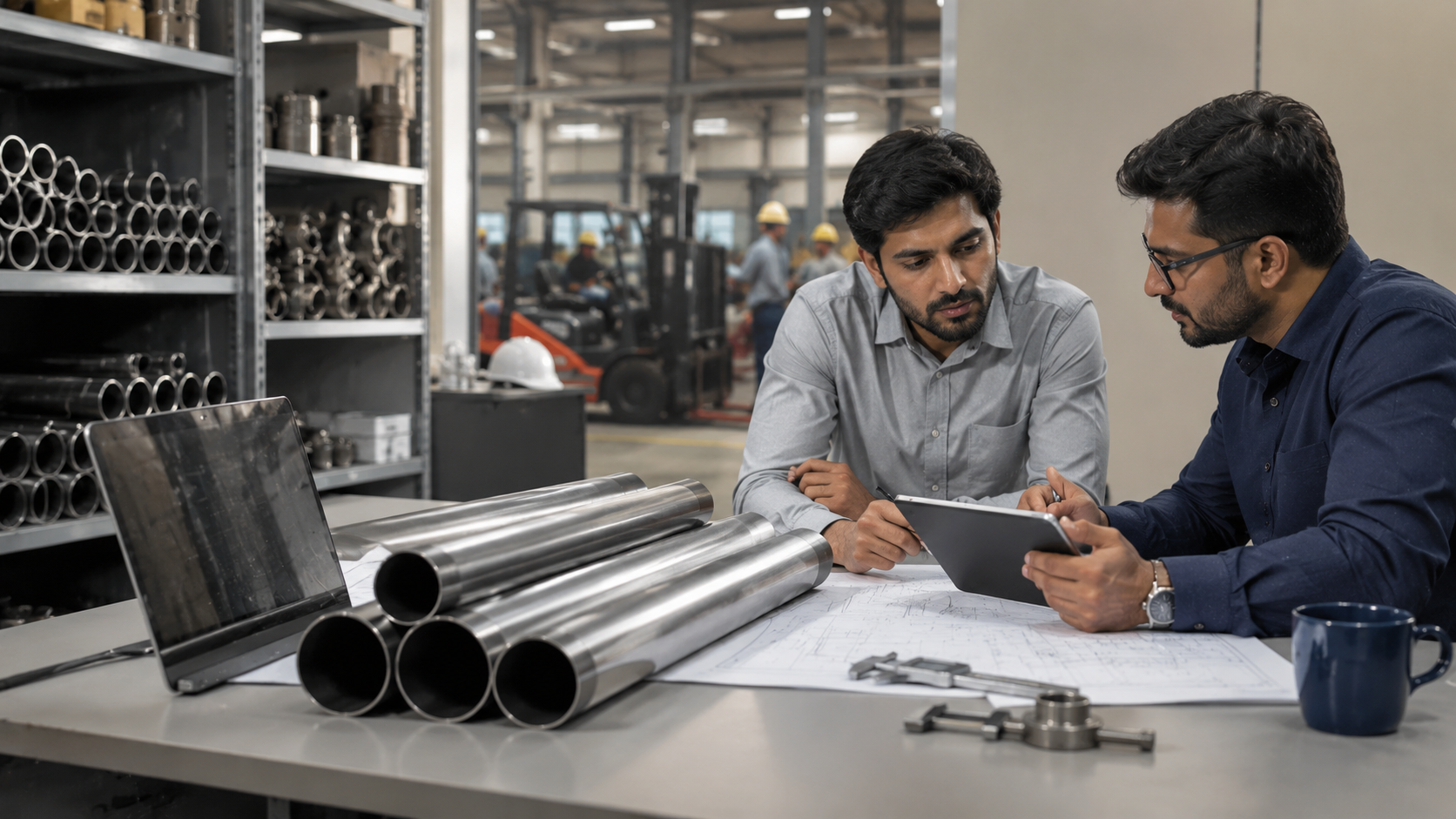
Top 5 MS Pipe Distributors in Coimbatore How to Evaluate Before You Buy
If you have ever placed a bulk order for mild steel pipes and ended up with delayed delivery, inconsistent quality, or a surprise bill at the end, you already know how much the wrong distributor can cost you. Choosing the right ms pipe distributors is not just about finding the cheapest price on the list. It is about finding someone who actually delivers what they promise, on time, at the grade your project needs. This Blog Explains you Clearly what to look for before you buy, the top ms pipe distributors in Coimbatore worth considering, and the red flags you need to avoid. Whether you are a contractor, fabricator, or project manager, this guide will help you make a smarter buying decision. 1.What Makes a Good MS Pipe Distributor Before you start comparing prices, you need to know what actually separates a reliable distributor from one that will slow your project down. Consistent Stock Availability A distributor might quote you a great price but fail to fulfil your order on time because they do not carry enough stock. Always ask about their warehouse capacity and how quickly they can fulfil orders of your size. A good ms pipe distributor will have multiple grades and sizes available at any given time without making you wait two weeks for restocking. Transparent Pricing With No Hidden Costs Some ms pipe dealers in Coimbatore quote one rate and then add transportation charges, handling fees, or GST surprises at the billing stage. A trustworthy supplier gives you an all-in price upfront. Ask for a written quotation that includes every cost before you commit. 2.Key Things to Evaluate Before You Buy Once you have shortlisted a few ms pipe suppliers in Coimbatore, run them through these checks before placing your first order. Grade and Quality Certifications Not all mild steel pipes are the same. IS 1239 and IS 3589 are the most common Indian standards for MS pipes. Ask your distributor which grade they stock and whether they can provide mill test certificates or quality documentation. If they hesitate, that tells you something important. Delivery Timelines and Reliability Ask how they handle bulk orders and what their average delivery lead time is for your area. Ms pipe distributors near me who operate locally will generally offer faster turnaround, but always confirm this in writing. A day’s delay on a construction site can cost you far more than any discount you negotiated. Minimum Order Quantities Some distributors cater only to large-scale buyers and set minimum order quantities that do not suit smaller contractors or fabricators. Know your requirement upfront and check whether the distributor is willing to supply at your scale without inflating the per-unit price. 3.Top 5 MS Pipe Distributors in Coimbatore Here are five ms pipe distributors in Coimbatore that are commonly approached by contractors and fabricators in the region. This is not a paid ranking. This is an honest overview based on market reputation and buyer feedback. 1. Black Buildtech Black Buildtech operates a highly vetted, rigorously audited procurement framework that connects commercial buyers directly with mill-certified mild steel lots . If your project mandates strict compliance without the risk of trading middlemen, our supply network matches your structural engineering blueprints with inventory that includes complete Mill Test Certificates (MTC), certified physical weight verifications, and managed site logistics tailored to your exact delivery timelines. 2. Hindustan Hardware (HH Iron and Steel) Positioned as a premier institutional supply house in Coimbatore, Hindustan Hardware is a major distributor procuring directly from primary producers like JSW Steel, SAIL, and Vizag Steel . They are heavily preferred by large-scale infrastructure contractors, structural engineers, and industrial developers who require massive bulk volume dispatches of standard-compliant line pipes across Tamil Nadu . 3. Als Pipe Enterprises Operating from Rangakonar Street in the heavy industrial hub of Kattoor, Als Pipe Enterprises is one of the longest-standing pipe distributors in the region, established in 1965 . They carry an extensive regional reputation among plumbing contractors, fluid conveyance engineers, and water management units for supplying durable MS pipes alongside certified industrial hardware accessories. 4. SM Steels & Tubes Based along 3rd Street in Chinnavedampatti, SM Steels & Tubes operates as a highly active wholesaler and retail trader stocking a versatile range of structural steel sections, metal plates, and branded Jindal MS pipes . They feature exceptional market flexibility with regard to minimum order sizes, making them a preferred destination for independent fabrication workshops and mid-tier machinery builders who need mixed-size bundles . 5. Magnus Steels Magnus Steels is a highly visible, trusted steel pipe supplier in Coimbatore that specializes in delivering Indian Standard (IS) compliant mild steel sections across Circular Hollow Sections (CHS), Rectangular Hollow Sections (RHS), and Square Hollow Sections (SHS) [5]. Known for maintaining consistent physical stock depths and transparent billing practices, they are an excellent partner to evaluate for structural framing and architectural industrial installations 4.MS Pipe Distributors Near Me and How Location Affects Your Buy When people search for ms pipe distributors near me, they are not just looking for convenience. Location directly affects price. Transportation cost from a distant warehouse adds up quickly, especially on bulk orders measured in tonnes. A distributor based close to your project site or your fabrication yard keeps logistics costs predictable. Buyers from nearby districts often source from Coimbatore because of the city’s strong steel supply chain. If your project is outside the city, ask your shortlisted distributor about delivery coverage and whether freight is calculated per kilometre or as a flat rate. Red Flags to Watch Out For When Choosing MS Pipe Dealers These are the warning signs that experienced buyers have learned to spot. Keep them in mind before signing any purchase order. No written quotation — Any ms pipe dealer in Coimbatore who refuses to give you a written quote with itemised pricing is a risk. Verbal agreements leave you with no protection if the final bill looks different. No quality documentation — If a distributor cannot provide IS
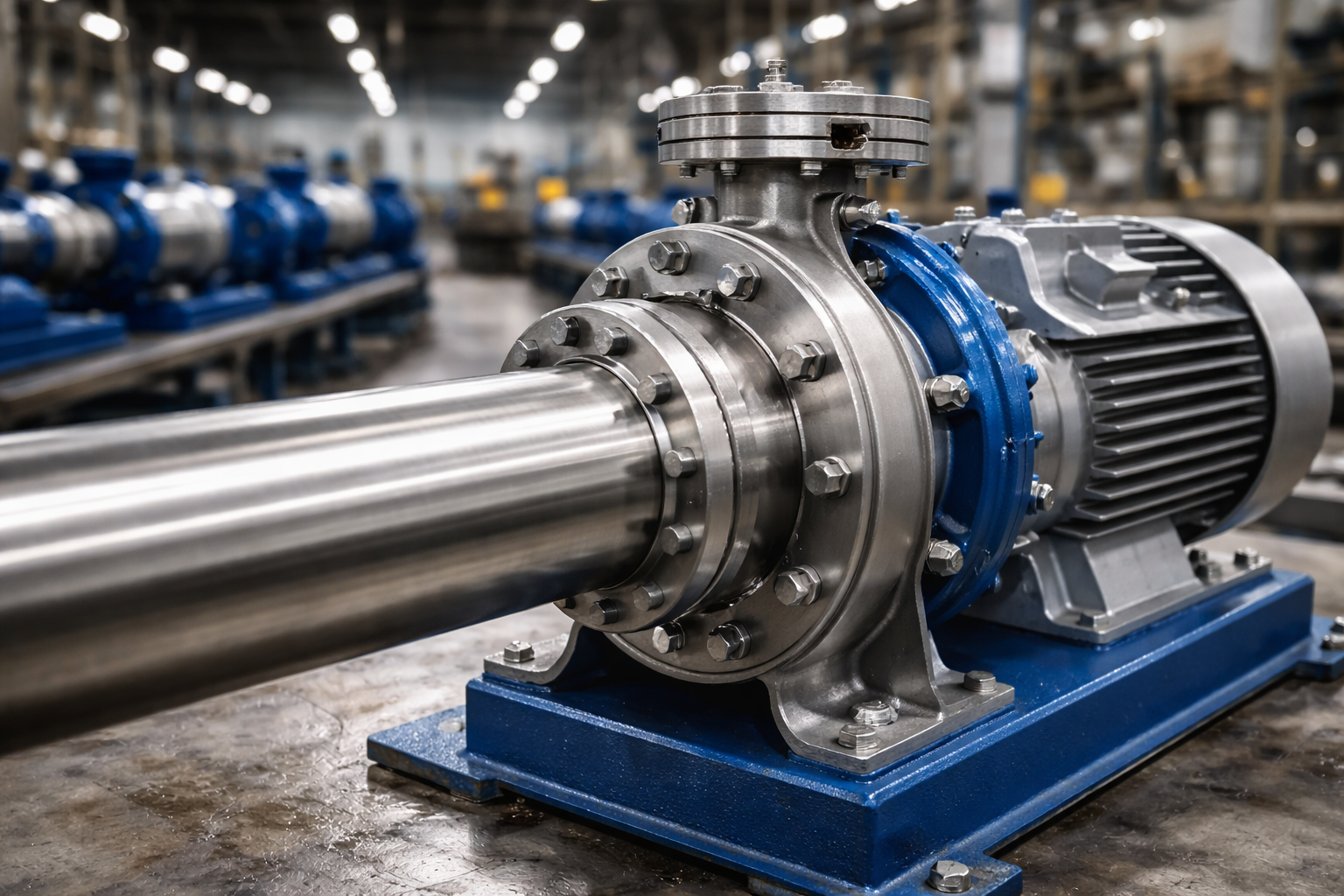
MS Seamless Pipe VS ERP Pipe Which Should Pump Manufactures Choose in 2026?
The pipe you choose for your pump unit is not just a sourcing decision. It directly affects how long your pump lasts, how well it handles pressure, and how many rejection cycles you deal with down the line. Two pipe types come up again and again in pump manufacturing discussions: MS Seamless Pipe and ERP (Electric Resistance Welded) pipe. Both are made from mild steel. Both are widely available. But they perform very differently under the conditions that pump manufacturing demands. This article breaks down the real differences between the two, explains when each one is the right fit, and helps you make a smarter sourcing decision in 2026. If you are buying from ms pipe dealers in coimbatore or looking for seamless pipe in coimbatore, this guide gives you the technical clarity you need before you place your next order. What Is MS Seamless Pipe and How Is It Made The Manufacturing Process That Removes Weld Seams MS Seamless Pipe is manufactured by piercing a solid steel billet through a mandrel at very high temperatures. No welding is involved at any point. The result is a pipe that is one continuous piece of steel from end to end, with no joint, no seam, and no weak point. This process gives the pipe a uniform wall thickness throughout its length. That consistency is what makes MS Seamless Pipe a preferred choice in applications where structural reliability cannot be compromised. Why No Seam Means Stronger Pressure Tolerance In a welded pipe, the seam is always the weakest link. When internal pressure builds up, that seam area is where stress concentrates first. In a pump system running at high pressure, this is where failures tend to begin. MS Seamless Pipe removes that variable entirely. There is no seam, so there is no localised weak point. This is why engineers working on hydraulic pump systems, high-pressure delivery pumps, and industrial fluid handling systems consistently prefer it. What Is ERP Pipe and Where Does It Fit How Electric Resistance Welding Works ERP pipe (also called ERW pipe in many catalogues) is made by rolling a flat steel strip into a cylindrical shape and then fusing the two edges together using electrical resistance heat. The weld runs in a straight line along the full length of the pipe. Modern ERP pipe production has improved significantly in recent years. High-frequency welding techniques produce a tighter seam than older methods. That said, the seam still exists, and it still carries inherent pressure limitations compared to a seamless alternative. Common Applications for ERP Pipe in Industry ERP pipe is a practical and cost-effective choice for many everyday applications. It works well in structural frameworks, water distribution lines, gas pipelines operating at lower pressures, and general construction where extreme pressure tolerance is not required. For pump manufacturers, ERP pipe can serve in low-pressure water transfer assemblies, external structural components, and non-critical support sections. It is not built for high-pressure pump internals. Key Differences Between MS Seamless and ERP Pipe Pressure Rating and Burst Resistance MS Seamless Pipe consistently outperforms ERP pipe in pressure ratings. Because the wall thickness is uniform and there is no seam, it can handle higher internal pressures without risk of failure. For pump systems running above 150 PSI, seamless is almost always the safer and more reliable choice. ERP pipe has a lower burst threshold, mainly because the weld zone behaves differently from the base metal under pressure. For high-cycle applications where pressure fluctuates repeatedly, ERP pipe carries a higher long-term risk. Cost, Availability and Lead Time ERP pipe is cheaper to produce and therefore cheaper to buy. If your project budget is tight and the application is low-pressure, ERP can save you money without creating performance problems. MS Seamless Pipe costs more per metre, and in some sizes it may have longer lead times depending on stock availability. However, many reliable ms pipe dealers in coimbatore keep standard seamless sizes in stock, so lead times have improved significantly for common dimensions. Surface Finish and Corrosion Resistance Both pipe types are available in similar surface finishes. However, because MS Seamless Pipe goes through a controlled hot-working process, the internal surface is often smoother and more consistent, which matters in fluid-carrying applications where flow efficiency and corrosion resistance are priorities. ERP pipe has a heat-affected zone around the weld seam that can, over time, corrode faster than the surrounding metal if not properly treated or coated. Why Pump Manufacturers Prefer MS Seamless Pipe High-Pressure Hydraulic Pump Systems Hydraulic pumps operate under sustained high pressure. Any pipe component in the system needs to hold that pressure reliably for thousands of operating hours. MS Seamless Pipe is built for this. Its uniform wall structure and seam-free body make it the go-to material for pump bodies, pressure lines, and high-stress fluid circuits. Pump manufacturers who switch from ERP to MS Seamless Pipe for high-pressure components typically report fewer rejection cycles, reduced leakage incidents, and longer service life from their finished units. Dimensional Accuracy in Close-Tolerance Pump Bodies Pump manufacturing demands precise tolerances. If a pipe’s outer diameter or wall thickness varies even slightly, it creates alignment issues during assembly and affects the overall performance of the pump unit. MS Seamless Pipe offers tighter dimensional consistency than ERP pipe. That consistency translates directly into faster assembly, fewer fitting issues, and a more reliable finished product. If you source your ms seamless pipe in coimbatore from a reputable dealer, you will notice the difference in how predictably the material performs across batches. When ERP Pipe Still Makes Sense Low-Pressure Water Transfer Applications Not every component in a pump system runs at high pressure. For water transfer pumps operating at lower pressure ratings, for suction lines, and for drain or return circuits, ERP pipe can handle the job at a lower cost. The key is matching the pipe specification to the actual operating conditions. Using MS Seamless Pipe everywhere when ERP pipe is sufficient in certain sections is not always necessary.
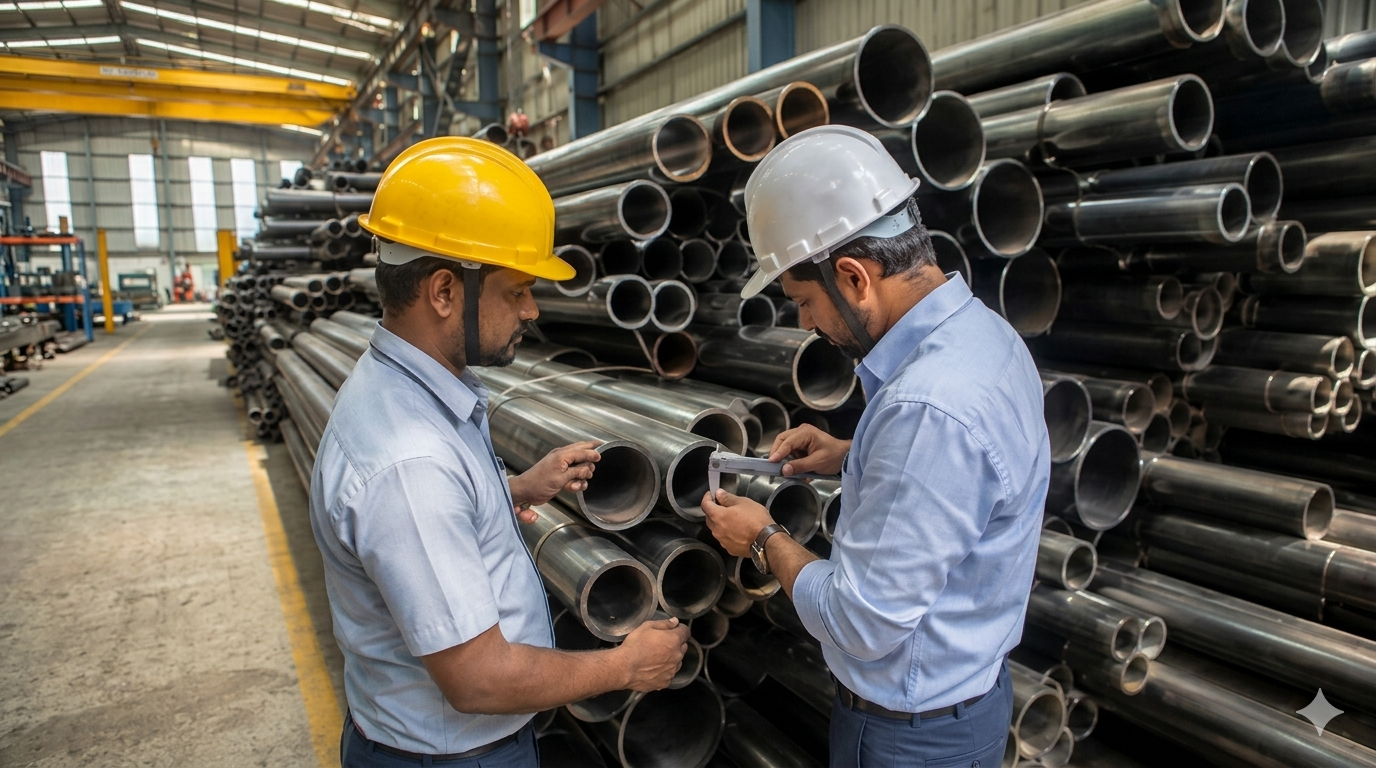
How to Negotiation, Quality Verification, and Avoid Supplier Traps with Bulk Buying MS Seamless Pipes
If you have ever placed a bulk order for MS seamless pipes and felt something was off, you are not alone. Maybe the price looked right on paper but the invoice told a different story. Maybe the pipes arrived and something just did not match what you ordered. Or maybe the supplier stopped picking up calls after payment cleared. These are not rare situations. Contractors and project managers across Tamil Nadu run into exactly these problems when procurement is rushed or poorly planned. At Black Buildtech, we have worked closely with buyers in this region for years. We know what goes wrong and more importantly, we know what to do instead. This article gives you our straight opinion on how to negotiate smartly, verify quality without guesswork, and protect yourself from supplier traps that quietly drain your project budget. Read this before your next bulk order. 1.Why Bulk Buying MS Seamless Pipes Makes Sense for Your Projects Buying MS seamless pipes in volume is genuinely worth it, but only when you go in with the right approach. The core benefit is straightforward: the more you commit to buying, the lower your per-unit cost. For large infrastructure jobs, industrial installations, or multi-phase construction, that difference adds up to real savings. Volume Savings vs. Hidden Costs The savings are real, but so are the costs that buyers often overlook. Freight charges, handling fees, storage requirements, and wastage from substandard material can quietly cancel out a bulk discount. Before you accept any quoted price, factor in delivery distance, unloading logistics, and the replacement cost if quality falls short. A simple rule to keep in mind: if a price feels too good compared to the market, something is likely being traded off somewhere else. How Regional Buyers Benefit From Bulk Orders The industrial activity across Tamil Nadu is high, which means local suppliers compete seriously for volume orders. That competition gives you genuine negotiating room. The key is knowing how to use it rather than simply accepting whatever number a supplier puts forward first. 2.How to Negotiate the Right Price on MS Seamless Pipes Negotiation is not about pushing a supplier to their lowest number. It is about understanding what actually drives the price and using that knowledge to arrive at a fair deal for both sides. What Price Factors Actually Matter The price of MS seamless pipes is driven by a few core factors: raw material costs (primarily steel billet rates), wall thickness, outer diameter, grade specification, and order volume. When you understand these, you stop negotiating blindly and start asking questions that matter. Ask your supplier to break the quote into parts: base material cost, processing charges, transportation, and taxes listed separately. Any supplier who is unwilling to do this is worth approaching with caution from the start. Negotiation Tactics That Work With Local Distributors When dealing with mild steel pipe distributors in Tamil Nadu, a few practical approaches consistently deliver results: Do not negotiate on price alone. Consistency of supply, lead times, and how a supplier handles problems after delivery matter just as much on serious projects. 4.How to Verify MS Seamless Pipe Quality Before You Pay This is where bulk buyers lose the most money. Quality checks get skipped because they feel like extra work or because the supplier seems trustworthy. Neither is a good enough reason to skip them. Key Quality Checks Every Buyer Must Run Before accepting any bulk shipment of MS seamless pipes, run these checks without exception: Quality Verification Parameter Inspection Method Standard Expectation Dimensional Tolerance Vernier Caliper & Micrometer Check Wall thickness must sit within standard IS 1239 / IS 3589 schedule tolerances (+/- 12.5%). Material Authentication MTC (Mill Test Certificate) Review Cross-verify the EN 10204 3.1 certification and match the stamped heat number on the pipe body. Structural Integrity Sample Weighbridge Verification Weigh sample bundles against the theoretical kilograms-per-meter weight chart to catch thin-walled lots. What Certifications and Grade Markings to Look For Genuine MS seamless pipes carry clear markings: grade (IS 1239, IS 3589, and IS 1161 are the most common Indian standards), heat number, batch reference, and manufacturer details. If pipes arrive unmarked or with markings that appear inconsistent or freshly stamped, reject the batch and document your reasons in writing. Always ask for a Mill Test Certificate (MTC) with every bulk order. This document confirms the chemical composition and mechanical properties of the material you are purchasing. A supplier who cannot provide one is selling you an unverified product, regardless of what they tell you verbally. 5.Common Supplier Traps and How to Spot Them Early Some traps are deliberate. Others happen because of poor supplier systems and loose documentation. Either way, the financial loss lands on you. Bait-and-Switch Tactics in the Pipe Trade This is the most common trap buyers face. A supplier quotes a specific grade and specification. You agree and make payment. What arrives is a lower grade, a thinner wall thickness, or a different standard entirely. By the time you identify the problem, the supplier already has a ready explanation and your goods are sitting on your site. The solution is straightforward but must be non-negotiable: inspect before acceptance, every single time. Never allow a supplier to raise an invoice before you have physically confirmed the delivery matches your purchase order in full. Red Flags in Supplier Communication and Documentation Watch for these warning signs when working with any new supplier: Each of these individually is a concern. More than one appearing together is a clear signal to walk away and find a more transparent supplier. 6.Choosing the Right Supplier in Tamil Nadu The market across Tamil Nadu has strong supply options, but not every option is worth trusting with a bulk order. Choosing right means looking beyond who is offering the lowest number. What Separates Reliable Distributors From Risky Ones Reliable mild steel pipe distributors have consistent stock, verifiable sourcing, transparent documentation, and a track record of standing behind what they supply. When you ask them
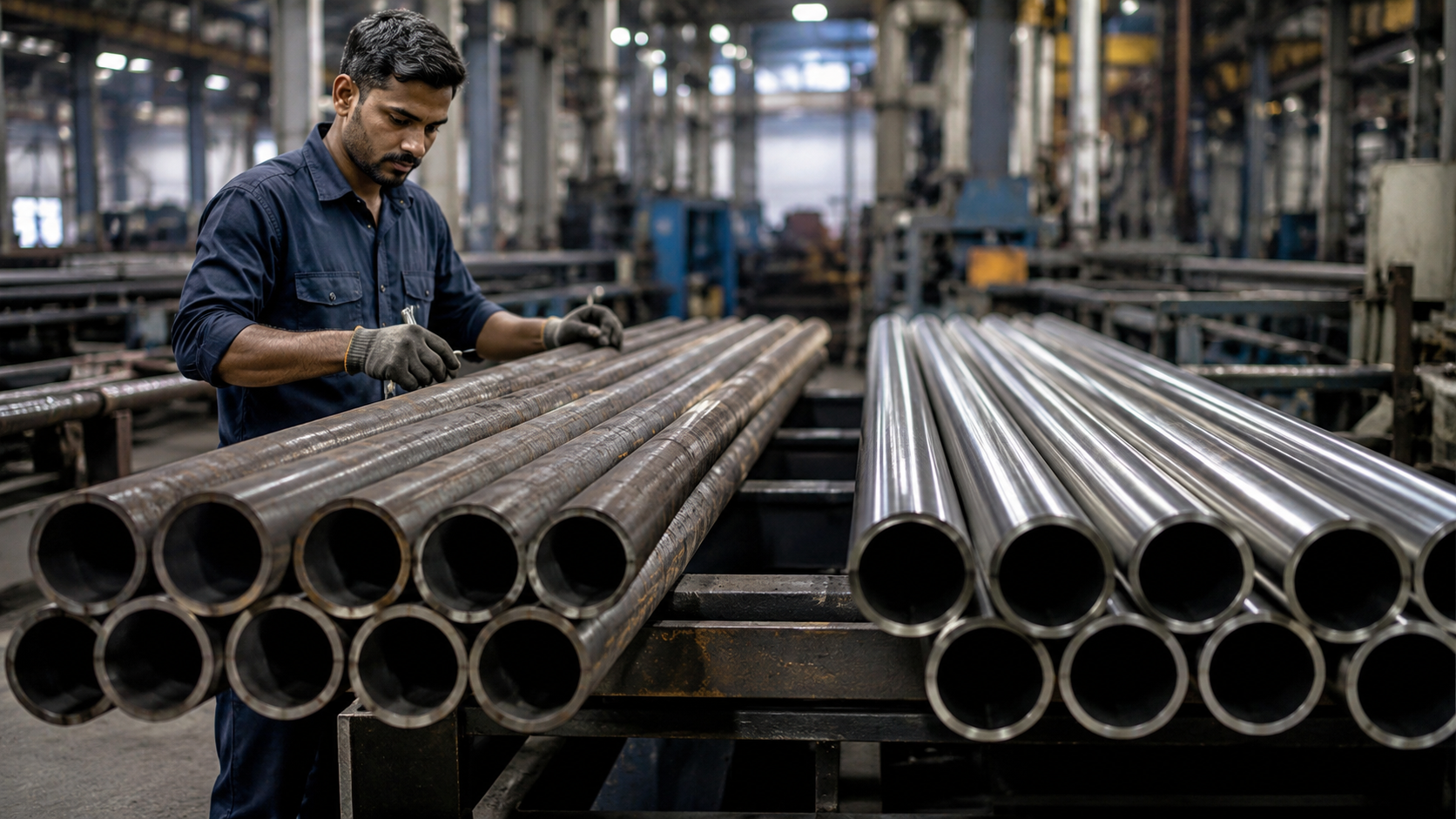
Hot Finished vs Cold Drawn MS Pipes Which Process Gives You Better Performance in High-Pressure Lines?
Most buyers focus on the size and grade of their pipe and move on. But when it comes to high-pressure lines, the manufacturing process behind your MS Pipes can be the difference between a system that performs reliably for years and one that gives you problems you did not see coming. Here is what you need to know before you order. What Is a Hot Finished MS Pipe and How Is It Made Hot finished MS pipes are produced by heating a steel billet above its recrystallisation temperature, typically above 1000°C, and then rolling or forming it into a pipe shape while the steel is still in a semi-plastic state. Because the steel is so hot during forming, it flows relatively easily into shape without requiring the same level of mechanical force that cold processes demand. The rolling mill process explained simply The billet is pushed through a series of rollers that progressively form it into a hollow tube. As the pipe cools, it contracts slightly and a layer of mill scale forms on the outer surface. This dark grey, rough-textured coating is one of the most recognisable characteristics of a hot finished pipe. It is not a defect. It is simply what happens when hot steel meets air during the cooling process. How heat affects surface finish, grain structure, and dimensional tolerance The high temperature during forming relaxes the steel’s grain structure, which relieves internal stress and gives the pipe reasonable ductility. The trade-off is dimensional tolerance. Because the steel shrinks as it cools, the final dimensions of a hot finished pipe can vary within a wider band than a cold drawn pipe. Wall thickness variation and slight out-of-roundness are both more common in hot finished MS pipes. For many applications this is perfectly acceptable. For high-pressure lines it is worth understanding before you commit to a specification. What Is a Cold Drawn MS Pipe and How Does It Differ Cold drawn MS pipes start their life in much the same way as hot finished pipes, as a formed tube. The difference comes in the finishing stage. After the initial forming, the pipe is pulled through a hardened die at room temperature. This drawing process reduces the pipe’s outer diameter and wall thickness to very precise final dimensions. The cold drawing process step by step The tube is pointed at one end, threaded through the die, gripped by a draw bench, and pulled through at controlled speed. The die compresses the steel as it passes through, tightening every dimension. This process can be repeated multiple times with progressively smaller dies to achieve the target specification. Between draws, the pipe may be annealed to restore ductility before the next reduction. The result is a pipe with a smooth, bright surface, consistent wall thickness, and tight dimensional tolerances. What tighter tolerances mean in real-world use When a pipe is specified at 48.3mm outer diameter with a 3.2mm wall, a cold drawn MS pipe will deliver those dimensions far more consistently along every metre of its length. That consistency matters when you are threading fittings, welding joints, or working to a rated pressure specification. The less variation there is in wall thickness, the more predictably the pipe performs under load. Head to Head Comparison for High-Pressure Line Applications Here is how the two processes stack up when it comes to the factors that matter most in a pressure system. Factor Hot Finished Cold Drawn Tensile strength Good. Adequate for general use. Higher. Work hardening during drawing increases yield and tensile strength. Wall thickness consistency Wider tolerance band. Acceptable variation across the pipe length. Tighter. Consistent wall thickness reduces weak points in pressure systems. Surface finish Rough mill scale. Fine for structural use. Smooth, bright finish. Better for precision fittings and sealing faces. Dimensional accuracy Moderate. Slight out-of-roundness possible. High. Suitable for close-tolerance assemblies. Cost Lower. Faster process, less finishing required. Higher. Additional processing steps add cost. Availability Wider range of sizes. Standard sizes readily stocked. Good availability in common sizes. Lead times may apply for non-standard. When to Choose Hot Finished MS Pipes Hot finished MS pipes are a strong, cost-effective choice for a wide range of applications. If your project does not demand the precision of a cold drawn pipe, there is no reason to pay for it. Ideal use cases in structural and general piping Scaffolding, structural columns, handrail systems, general water lines, low-pressure fluid transfer, agricultural irrigation frameworks, and construction support structures are all well served by hot finished MS pipes. These are applications where the pipe’s job is to carry load or convey fluid at modest pressures, and where a slightly rough surface or a millimetre of dimensional variation causes no practical problem. Cost advantage and availability considerations Hot finished pipes are faster and cheaper to produce, and that saving passes down the supply chain. If you are ordering large quantities for a structural project, the cost difference between hot finished and cold drawn can be meaningful. Availability is also typically broader. Most MS pipe stockists carry a wider range of hot finished sizes because demand for them is higher across the construction sector. When to Choose Cold Drawn MS Pipes When the application involves sustained pressure, critical fluid systems, or components that need to fit together with precision, cold drawn MS pipes are the specification to reach for. Critical pressure systems where precision matters Hydraulic lines, pneumatic systems, boiler feed lines, fire suppression pipework, and any system where the pipe is expected to hold pressure over an extended period all benefit from cold drawn specification. The tighter wall tolerances mean the pipe performs closer to its rated figures. The higher tensile strength from work hardening gives the system more margin before the material approaches its yield point. In cyclic pressure applications where the pipe expands and contracts repeatedly, that additional strength and consistency reduces the risk of fatigue failure over time. Industries that specifically demand cold drawn specifications Engineering manufacturers, automotive component fabricators, precision hydraulic system
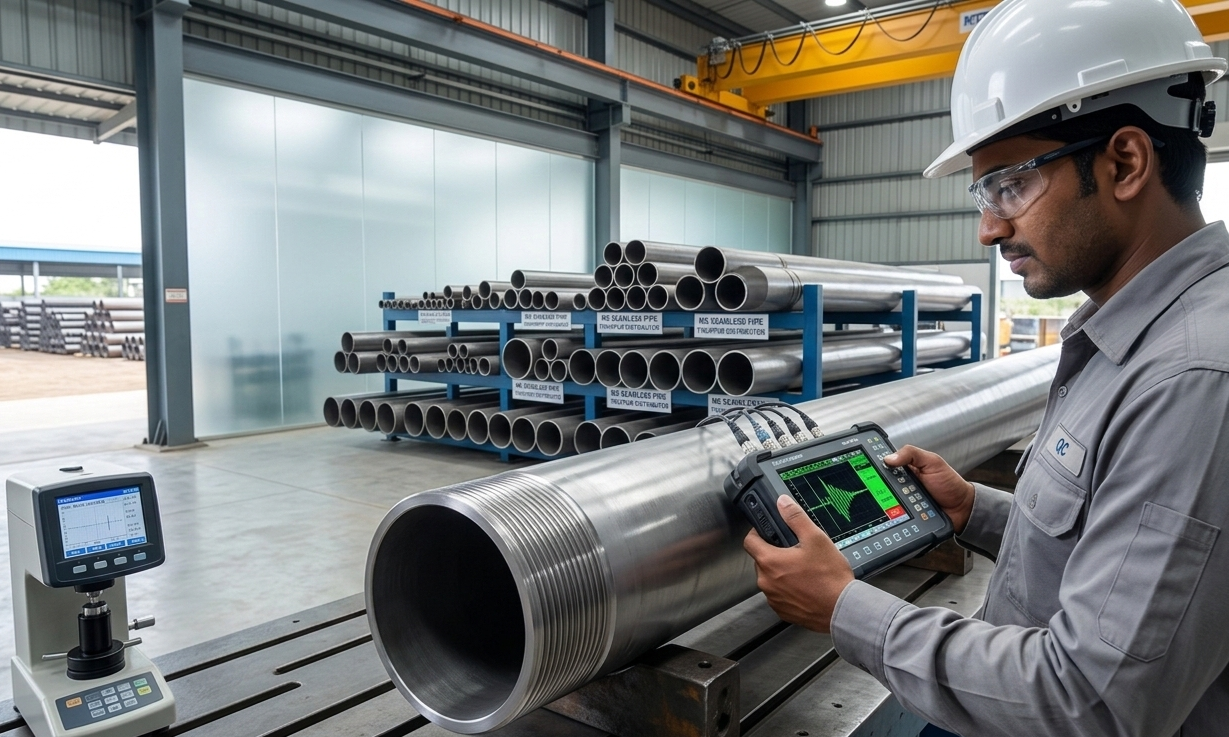
The Ultimate Buyer’s Guide to Sourcing Quality MS Seamless Pipe in Tiruppur and Beyond
The industrial landscape of Tamil Nadu is evolving at an incredible pace. From the bustling automotive hubs in Sriperumbudur to the massive thermal power plants in Tuticorin, the demand for high-grade piping solutions is higher than ever. At the heart of these massive structures lies a critical component: the MS Pipe. Unlike standard pipes, Mild Steel Pipes are the preferred choice for engineers who cannot afford a single point of failure in their systems. In the rapidly expanding industrial corridors of Coimbatore and Salem, these seamless pipes are indispensable for their ability to withstand the intense pressures of hydraulic systems and high-temperature steam lines. Because they are manufactured through a process of piercing a solid steel billet rather than welding a flat sheet, the resulting ms seamless pipe possesses a uniform molecular structure. This structural integrity is vital for the textile and manufacturing sectors of Tamil Nadu, where equipment often runs 24/7. Engineers favor these pipes because they eliminate the risk of a “split seam,” which is the most common failure point in traditional welded piping during sudden pressure surges. Furthermore, the versatility of mild steel pipes makes them the backbone of the state’s burgeoning oil and gas infrastructure. As new pipelines are laid to connect refineries to distribution centers, the reliability of the MS pipe ensures that hazardous materials are transported safely across diverse terrains. Whether it is resisting the corrosive salt air of the coastal industrial zones or handling the mechanical stresses of a heavy-duty pump house, these pipes offer a balance of strength and ductility that is hard to match. By choosing high-quality ms seamless pipes, project managers across Tamil Nadu are not just building pipelines; they are securing the long-term operational efficiency of the state’s most critical industrial assets. Understanding the Power of Seamless Construction The Advantage of Sourcing from Chennai Chennai is often called the “Gateway to South India,” and for the steel industry, this is literally true. The proximity to the Chennai and Ennore ports allows local distributors to stock a massive variety of imported and domestic MS Seamless Pipe. For a business owner or a project manager, sourcing locally from hubs like Parrys, Manali, or the industrial estates of Guindy means lower lead times. In a world where project delays can cost lakhs of rupees per day, having a supplier who can deliver Mild Steel Pipes within 24 to 48 hours to sites in Coimbatore, Madurai, or Trichy is a massive competitive advantage. Industry Applications Across Tamil Nadu The versatility of MS Seamless Pipes makes them indispensable across various sectors: Price Trends and Market Realities As we move through 2026, the price of Mild Steel Seamless Pipes in Tamil Nadu is influenced by global iron ore prices and local demand. Currently, prices in the Chennai market hover between ₹85 to ₹105 per kg, depending on the size, schedule (wall thickness), and origin. It is important to note that “Schedule 40” or “Schedule 80” pipes will carry a premium because of the extra material used to create thicker walls. Buyers should also account for GST (18%) and transportation costs when budgeting for their projects. A Professional Buyer’s Checklist Before finalizing your purchase, follow these steps to ensure you are getting genuine quality: Finding the Right Partner A reliable supplier is more than just a vendor; they are a partner in your project’s success. Look for stockists who have a wide range of sizes from 1/2 inch to 24 inches and who offer customization like pipe cutting or beveling. In Tamil Nadu, reputation is built on trust and timely delivery. Choose a business that understands the local landscape and can provide technical support when your engineers have questions. Are you planning a new industrial project or looking to restock your inventory with high-grade MS Seamless Pipes? Our team provides expert guidance and competitive pricing across Tamil Nadu. Contact Black Buildtech today for a customized quote or to speak with our technical experts about your project requirements. Frequently Asked Questions What is the difference between MS Seamless Pipe and ERW Pipe? MS Seamless pipes are made from a solid billet and have no joints, making them stronger for high-pressure use. ERW (Electric Resistance Welded) pipes are made from steel strips and have a longitudinal weld seam. What is the current price of MS Seamless Pipe per kg in Chennai? As of early 2026, the price generally ranges from ₹65 to ₹85 per kg + GST, though this fluctuates based on the brand (Jindal, MSL, or Imports) and the total quantity. Which is the best grade for high-pressure steam lines? ASTM A106 Grade B is the most recommended grade for high-pressure and high-temperature steam applications in power plants. How can I verify the quality of a Mild Steel Seamless Pipe? Always check the Mill Test Certificate (MTC) provided by the supplier. You can also perform a “Hydro Test” to ensure the pipe can handle the rated pressure without leaking. Do you provide delivery to cities like Coimbatore and Trichy? Most major Chennai-based suppliers have logistics tie-ups to deliver materials across all districts of Tamil Nadu within 2 to 3 business days. What are the common sizes available for MS Seamless Pipes? Sizes typically range from 1/4 inch to 24 inches in diameter, with various wall thicknesses known as “Schedules” (e.g., Sch 40, Sch 80, Sch 160). Can MS Seamless Pipes be used for underground water lines? Yes, but they should be coated with anti-corrosive materials like 3LPE or coal tar epoxy to prevent rusting from soil moisture. Why is “Schedule” important in pipe selection? The schedule number indicates the thickness of the pipe wall. A higher schedule means a thicker wall, which allows the pipe to withstand higher internal pressure. Is there a minimum order quantity (MOQ) for buying in Chennai? Many retail stockists in Parrys allow small purchases (a few lengths), but for industrial pricing, a minimum of 1 to 2 tons is usually required. Are imported MS Seamless Pipes as good as Indian brands?
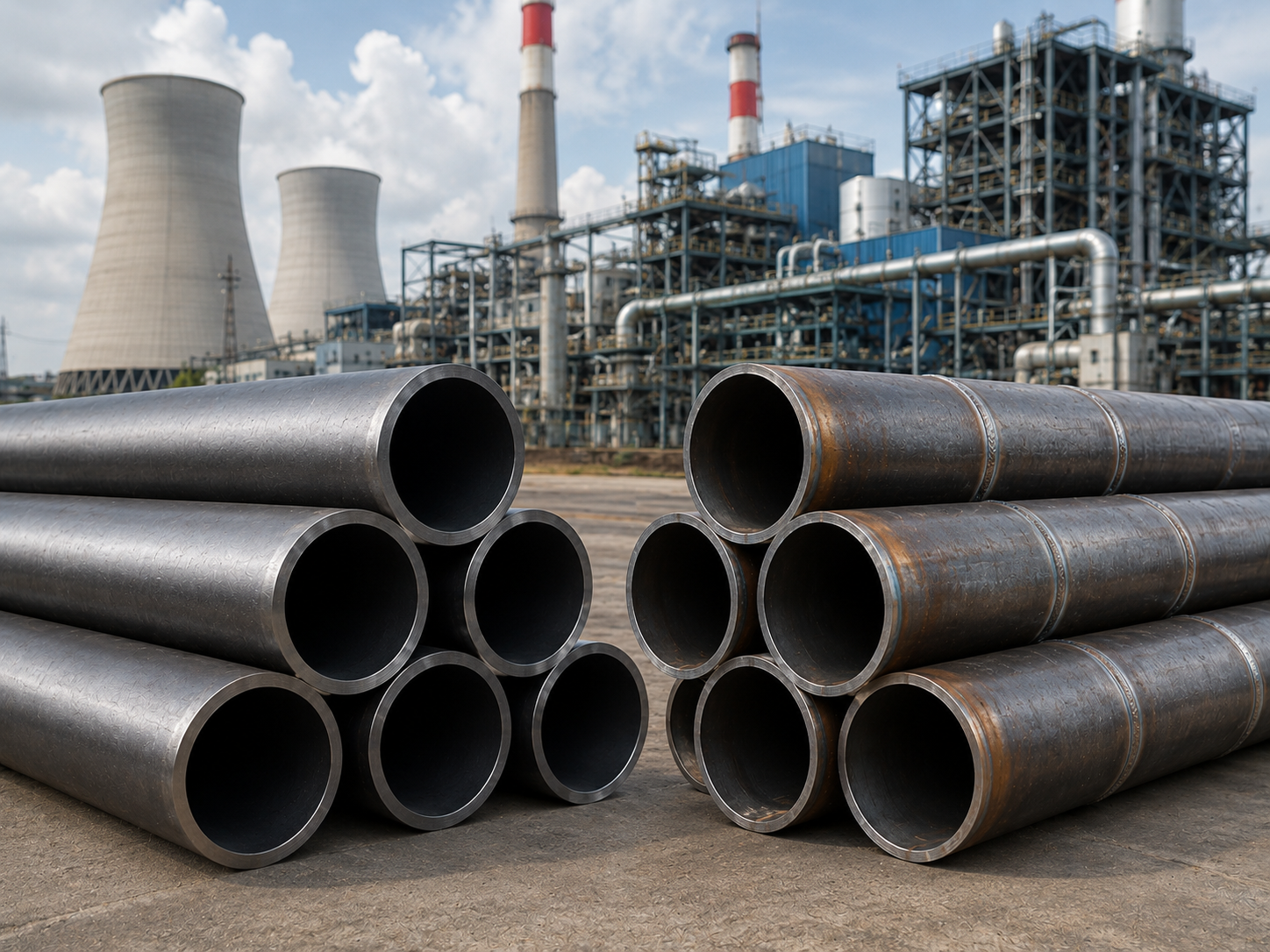
Key Differences Between MS Seamless Pipes and Welded Pipes for Power Plant Engineering
In the demanding world of power plant engineering, the piping infrastructure is responsible for transporting high-pressure steam, cooling water, and fuel. The choice between Seamless pipes and welded pipes is a fundamental engineering decision that affects the plant’s safety, longevity, and operational efficiency. A Seamless Pipe is often viewed as the premium choice for high-stress environments, while welded pipes offer a versatile solution for large-scale, lower-pressure systems. Understanding the nuanced technical differences between these two is essential for avoiding catastrophic failures and optimizing the life cycle costs of a power generation facility. The main difference lies in how these pipes are built. In contrast, a Welded Pipe is made by rolling a flat sheet of steel into a circle and joining the edges with a high-heat weld. This “seam” is naturally the most vulnerable part of the pipe, as it is where cracks or corrosion are most likely to start under high pressure. In a power plant, where safety is the top priority, engineers often choose seamless pipes for “critical paths” like high-pressure steam lines. Even though modern welding technology is very advanced, the physical strength of a solid, one-piece tube provides a much higher Factor of Safety. By eliminating the seam, you eliminate the risk of a “split failure,” ensuring the plant stays online and the workers remain safe even during extreme temperature spikes. Differences Between MS Seamless Pipes and Welded Pipes 1. Manufacturing Methodology and Structural Integrity The most basic difference lies in how the metal is formed. A ms seamless pipe is produced by heating a solid round steel billet and piercing it with a mandrel to create a hollow tube. This results in a continuous grain structure without any longitudinal or spiral joints. In contrast, welded pipes are made from flat steel plates or coils that are rolled into a cylindrical shape and joined at the seam using heat and pressure (such as Electric Resistance Welding). In power plant engineering, the absence of a weld in Mild Steel Pipes means there is no “heat-affected zone” (HAZ), which is often the first place a pipe fails under extreme stress. 2. Pressure Carrying Capacity In a power plant, pipes must withstand immense internal pressure. The “Hoop Stress” in a pipe is distributed evenly across the circumference of seamless pipes. Because there is no seam, there is no inherent weak point. Welded pipes are subject to “Joint Efficiency” factors. Engineers generally calculate that a welded pipe is only 80% to 85% as strong as a seamless pipe of the same grade and thickness. For high-pressure steam headers or boiler feed lines, the 100% efficiency of a ms pipe is usually a mandatory safety requirement. 3. Performance Under Thermal Cycling Power plants undergo constant heating and cooling cycles. This causes the metal to expand and contract. Because seamless pipes have a uniform metallurgical structure, they expand and contract evenly.In welded pipes, the weld material and the parent metal may have slightly different thermal expansion coefficients. Over thousands of cycles, this leads to “thermal fatigue” at the seam. For superheaters and reheaters in a power plant, where temperatures can exceed 500°C, the reliability of a Mild Steel Seamless Pipe is unmatched. 4. Corrosion Resistance and Flow Dynamics Internal corrosion is a major concern in power plant maintenance. Welded pipes can suffer from “seam-preferential corrosion.” The chemical composition of the weld may react differently to treated boiler water, leading to deep pitting along the joint. Furthermore, seamless pipes provide a smoother internal surface. Welded pipes often have an internal “flash” or bead from the welding process. Even if removed, the surface is never as perfectly smooth as a seamless bore. This smoothness reduces turbulence and friction loss, which improves the overall thermal efficiency of the plant. 5. Dimensional Tolerances and Wall Thickness Welded pipes are made from flat-rolled steel, which has a very consistent thickness. This means welded pipes often have better dimensional accuracy regarding wall thickness. Mild Steel Seamless Pipes, due to the piercing and rolling process, can have slight variations in wall thickness (known as eccentricity). However, in power plant engineering, the safety margin provided by the lack of a seam far outweighs the need for perfect wall symmetry. 6. Reliability in Extreme Environments Power plants are “high-consequence” environments. A pipe failure can lead to an explosion or a total blackout. Seamless Pipes are preferred for any “critical path” application because they eliminate the risk of a “split seam” failure. While modern Non-Destructive Testing (NDT) makes welded pipes very safe, the inherent physics of a seamless tube provides a higher “Factor of Safety.” In these high-pressure settings, the lack of a longitudinal weld reduces the number of potential stress corrosion sites, which is vital for long-term structural health. By choosing MS seamless pipes, engineers ensure that the system can withstand extreme thermal cycling and pressure spikes without the unpredictable risk of a seam fatigue failure. 7. Handling the Heat and the Pressure In a power plant, it’s not just about moving liquid; it’s about moving extreme energy. Steam flowing through these pipes can reach temperatures that would melt or weaken ordinary materials. Because mild steel seamless pipes are one solid piece of metal, they expand and contract uniformly. In welded pipes, the seam can sometimes act as a “stress point” where heat concentrates differently than the rest of the pipe. By using seamless, engineers ensure the pipe stays structurally sound even when the plant is running at full throttle. 8. Cost vs. Longevity At first glance, seamless pipes often carry a higher price tag than welded ones. However, in the world of power generation, smart managers look at the Life Cycle Cost rather than just the initial receipt. Because there is no weld seam to monitor for corrosion or cracks, the need for expensive, manual inspections is significantly reduced. More importantly, every hour a power plant is offline for emergency repairs, it loses a fortune in revenue. Seamless pipes act as an insurance policy you pay a bit more