
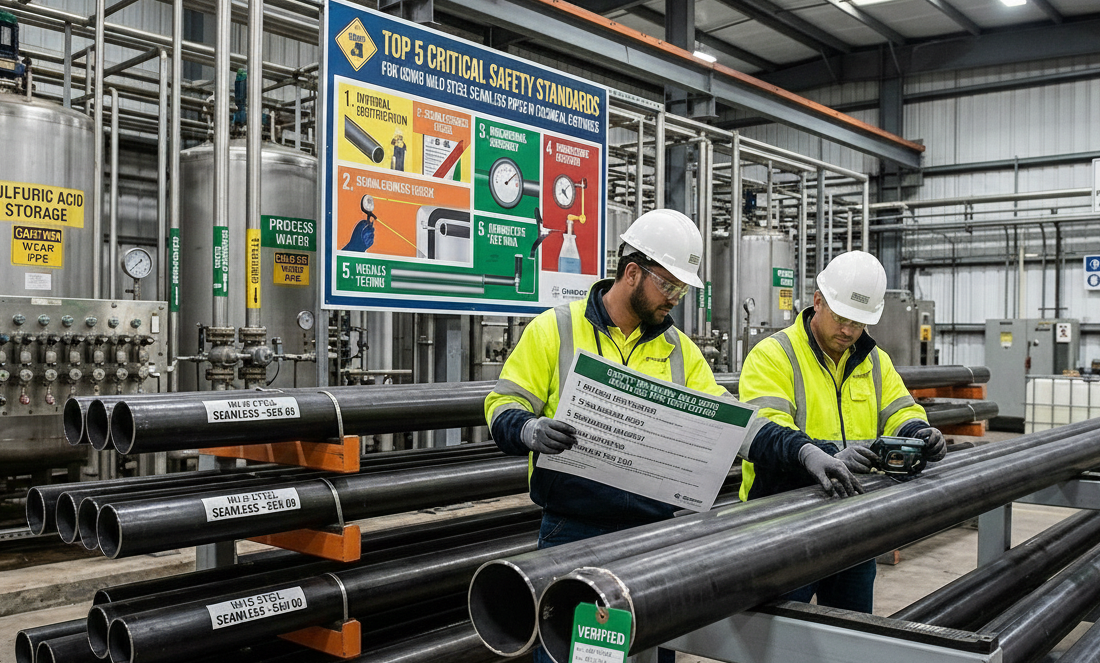
In the high-stakes environment of a chemical processing plant, the infrastructure holding everything together is just as important as the chemicals themselves. Seamless pipes are the workhorses of these facilities. Unlike welded pipes, which have a longitudinal seam that can act as a point of failure under stress, a mild steel pipe is manufactured through an extrusion process, resulting in a continuous, solid wall. However, even the strongest ms pipes can fail if safety standards aren’t strictly followed. In a chemical factory, a pipe failure doesn’t just mean a leak; it can mean toxic exposure, fires, or catastrophic explosions. To ensure the longevity of your infrastructure and the safety of your personnel, adhering to international and industrial safety standards is non-negotiable. 1. Pressure Rating and Wall Thickness Compliance (ASME B31.3) The most fundamental safety standard for any ms pipes used in chemical processing is compliance with pressure piping codes, specifically ASME B31.3. This standard dictates how pipes must be designed to handle the internal pressure of the fluids they carry. In a chemical factory, fluids are often moved at high velocities and varying pressures. If a mild steel seamless pipe has a wall thickness that is too thin for the intended pressure, it can undergo “creep” or sudden bursting. When selecting mild steel pipes, engineers must calculate the “Schedule” of the pipe This number represents the wall thickness relative to the pipe’s diameter. In hazardous chemical environments, safety margins are added to these calculations to account for potential surges in pressure or mechanical vibrations. 2. Corrosion Management and Material Compatibility While mild steel pipes are incredibly strong, they are susceptible to corrosion when exposed to certain acids, alkalis, or moisture. In a chemical factory, “corrosion under insulation” (CUI) or internal chemical erosion can thin the walls of a seamlesspipe over time, leading to a “pinhole” leak that can quickly escalate into a major rupture. Safety standards require a thorough analysis of the chemical compatibility between the pipe and the medium it carries. To mitigate this, many factories use mild steel seamless pipes that have been treated with protective coatings or linings. Furthermore, the standard practice includes adding a “Corrosion Allowance” to the initial wall thickness. This means if a pipe needs to be 5mm thick to hold pressure, it is manufactured at 8mm thick to allow for 3mm of gradual rust or erosion over 20 years without compromising safety. 3. Rigorous Non-Destructive Testing (NDT) Standards Because a mild steel seamless pipe is produced through intense heat and mechanical stretching, internal defects like “laps,” “seams,” or “slivers” can occasionally occur during manufacturing. While these might be invisible to the naked eye, they become catastrophic failure points under high pressure. Safety standards like ASTM A106 or API 5L require that these pipes undergo Non-Destructive Testing (NDT) to ensure structural integrity before they ever reach a chemical plant. In a chemical factory setting, NDT doesn’t stop after installation. Regular “In-Service Inspections” are mandatory. Using ultrasonic waves or X-rays, technicians can measure the remaining wall thickness of an ms pipe while it is still in use. This allows the facility to replace aging pipes before they reach a dangerous level of degradation. 4. Precision in Flange and Joint Connections A piping system is only as strong as its weakest link, which is almost always the joint. When connecting sections of seamless pipes, the methods used whether welding, threading, or flanging must meet strict safety codes (such as ASME B16.5). In chemical factories, leaks at the joints are the leading cause of “incidental exposure,” where workers are harmed by dripping chemicals. For ms pipes, “Butt-Welding” is the preferred method for permanent connections because it maintains the “seamless” nature of the flow. However, where pipes need to be disconnected for cleaning or maintenance, flanged joints are used. These joints must be perfectly aligned; if a flange is bolted on crookedly, it creates “residual stress” in the mild steel seamless pipe, which can lead to stress-corrosion cracking over time. 5. Thermal Expansion and Support Engineering Chemical reactions often involve extreme temperature changes. As a mild steel pipe heats up, the metal physically expands. If the pipe is “fixed” too tightly between two walls or machines, that expansion has nowhere to go. The resulting internal force can buckle the pipe or tear it away from its supports. Safety standards require that piping systems be designed with “flexibility” to handle these thermal cycles. Properly engineered supports and “expansion loops” are vital for seamless pipes. These loops allow the pipe to bend slightly and absorb the growth caused by heat without putting stress on the pumps or valves. Additionally, the spacing of supports must be calculated to prevent the mild steel pipe from “sagging” under its own weight when full of heavy chemical liquid. Why “Seamless” Matters in Chemical Safety You might wonder why we specify ms seamless pipes instead of the cheaper welded alternatives. The answer lies in the “Joint Efficiency.” A welded pipe has a seam that is statistically more likely to fail than the rest of the pipe body. In the world of high-pressure chemicals, having a mild steel seamless pipe means there is no “weakest line.” The pipe is equally strong at every degree of its circumference. This uniformity makes it much easier to predict how the pipe will behave under stress, making your safety calculations more accurate and your factory much safer for everyone involved. Safety in chemical piping is non-negotiable. Whether you are upgrading an existing facility or starting a new project in Tamil Nadu, choosing the right pipes and following strict standards is essential. Does your chemical factory meet current safety standards? Contact team at Black Build tech today for a consultation on high-quality MS Seamless Pipes and safety compliance for your piping infrastructure. Frequently Asked Questions Why are seamless pipes safer than welded pipes for chemical factories? Seamless pipes have no weld seam, which is usually the weakest point in a pipe. This makes them much less likely to leak or
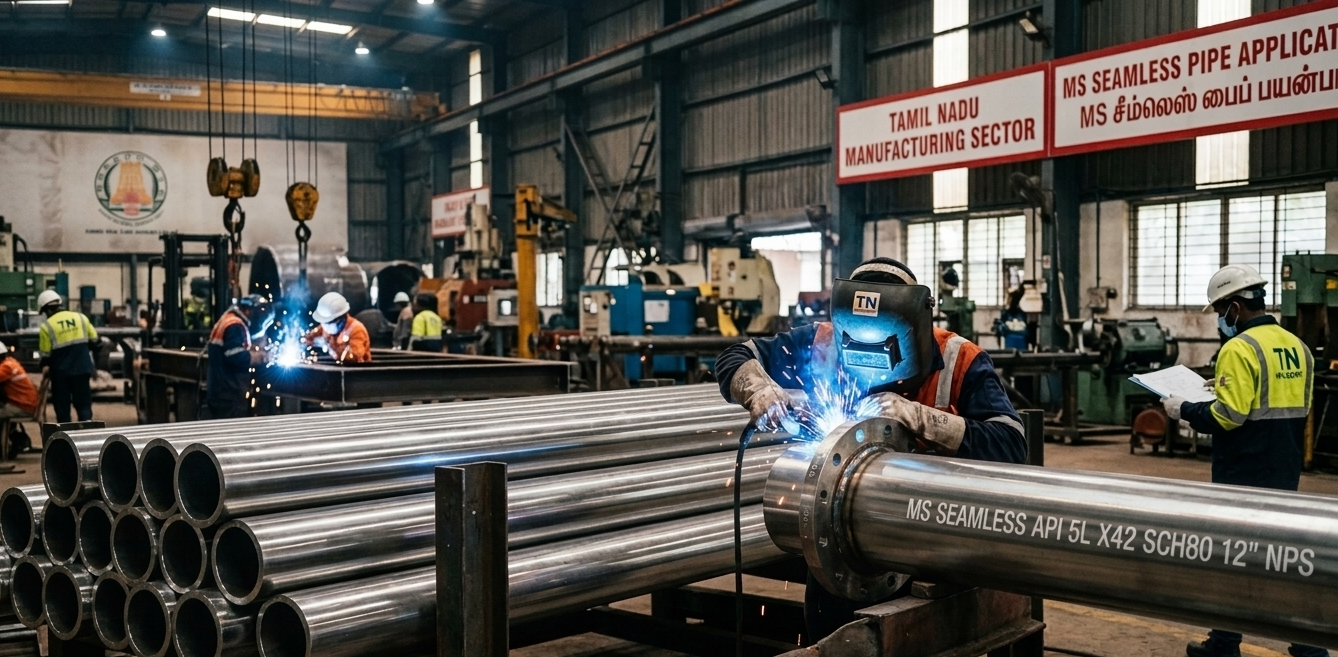
The Essential Role of MS Seamless Pipe in the Growth of Tamil Nadu’s Manufacturing Sector
Tamil Nadu has firmly established itself as a global manufacturing hub. From the “Detroit of Asia” in Chennai to the “Manchester of South India” in Coimbatore, the state’s industrial growth is a model for the rest of the country. However, behind the massive production numbers lies a critical infrastructure component: the piping system. Specifically, the ms pipe has become the backbone of these industrial units. As the state moves toward a trillion dollar economy, the demand for high-quality, reliable, and durable seamless pipes is skyrocketing. These pipes ensure that the factories powering Tamil Nadu’s economy operate without interruption or safety risks. Coimbatore, even a small leak in a piping system can halt an entire production line. By using mild steel seamless pipes, these facilities reduce the risk of sudden pressure bursts, ensuring that the “engines” of the state’s economy keep running 24/7 without costly downtime. Furthermore, as the state expands into green energy and advanced manufacturing, the need for high-performance materials is greater than ever. Seamless pipes are preferred because they can be easily customized and coated to resist the humid, coastal climate of Tamil Nadu. This durability helps local businesses save money on long-term repairs, allowing them to reinvest those funds into new technologies and help the state reach its trillion-dollar goal even faster. Detailed Usage of MS Seamless Pipes in Tamil Nadu Industries To understand why this product is so important, we must look at how different sectors across the state utilize a mild steel seamless pipe to maintain their competitive edge. 1. The Automobile and Component Industry Chennai, Kanchipuram, and Hosur form one of the world’s largest automotive clusters. In these massive plants, seamless pipes are indispensable. Unlike welded pipes, a seamless pipe can withstand the intense vibrations and high-pressure hydraulic requirements of assembly line robotics. In vehicle testing facilities, these pipes carry high-pressure fuels and lubricants. Any failure in a weld seam could lead to a fire or a total plant shutdown. By choosing mild steel seamless pipes, Tamil Nadu’s auto manufacturers ensure that their production lines remain safe and efficient. 2. The Textile and Processing Sector The textile belt, including Coimbatore, Tirupur, and Erode, relies heavily on steam for dyeing, printing, and finishing fabrics. Boilers are the heart of these factories. A mild steel pipe is the only safe choice for transporting high-temperature steam from the boiler to the processing floor. Because ms seamless pipes have no joints, they are not prone to “creep” or “thermal fatigue,” which happens when metal expands and contracts repeatedly. This reliability prevents steam leaks, which saves energy costs and protects the workers on the factory floor. 3. Power Generation and Energy Tamil Nadu is a leader in both thermal and nuclear power. In places like Neyveli and Ennore, the environment is incredibly harsh. MS pipes are used in the heat exchangers and condensers of these power plants. High-pressure water and steam are moved at velocities that would eventually erode the weld seam of a standard pipe. The uniform thickness and structural integrity of a seamless pipe ensure that these power plants can run for years without needing a major overhaul of their piping networks. 4. Chemical and Fertilizer Units The industrial corridors of Cuddalore and Ranipet house numerous chemical processing units. These plants handle fluids that are often volatile. A seamless pipe is preferred here because it offers a smoother internal surface. This smoothness prevents the buildup of chemical deposits that could lead to blockages or “pitting corrosion.” In the fertilizer industry, where ammonia and other gases are moved under high pressure, the seamless pipe provides a leak-proof environment that is essential for environmental safety. 5. The Sugar and Agro-Processing Industry Tamil Nadu has a vast network of sugar mills. These mills operate seasonally but at very high intensity. During the crushing season, the piping systems must handle juice, steam, and waste fluids without failing. Mild steel seamless pipe are used in the evaporation and crystallization stages. Their durability ensures that the mill does not face a breakdown during the peak season, which would lead to massive losses for the local farmers. In addition, these mills operate in environments with high temperature, pressure, and constant fluid movement. Because of this, the piping material must be strong and reliable. Mild steel seamless pipes are preferred since they can withstand continuous operations without leakage or structural weakness. This reliability helps sugar mills maintain smooth production and supports timely processing of sugarcane supplied by farmers. Why Seamless Technology is Essential for TN’s Growth The manufacturing sector in Tamil Nadu is moving toward “Industry 4.0.” This means higher pressures, faster production cycles, and stricter safety standards. The ms seamless pipe fits perfectly into this evolution. As Tamil Nadu attracts more global investment, international companies are looking for factories that meet world-class safety standards. Using seamless pipes is a clear signal that a facility is built to last and can handle high-intensity manufacturing. Because these pipes are made from a single piece of steel, they can withstand the extreme vibrations of heavy machinery without developing the tiny “hairline cracks” that often plague welded joints over time. Finally, the ease of maintenance offered by seamless technology allows TN’s industries to stay competitive on a global scale. In the busy industrial corridors of Oragadam or Hosur, stopping a machine for even a day can cost millions. Seamless pipes require fewer manual checks and have a much lower risk of sudden failure. This reliability ensures that the “Made in Tamil Nadu” label remains synonymous with quality and uninterrupted production. The success of Tamil Nadu’s manufacturing sector is built on quality. Whether it is a car part exported to Europe or a garment sold in the USA, the infrastructure that created it must be world-class. The ms pipe is a critical part of that infrastructure. By providing strength, safety, and efficiency, these pipes are helping the state’s industries grow faster and reach further.Ready to secure your project’s integrity? Don’t leave your high-pressure systems to chance with sub-standard
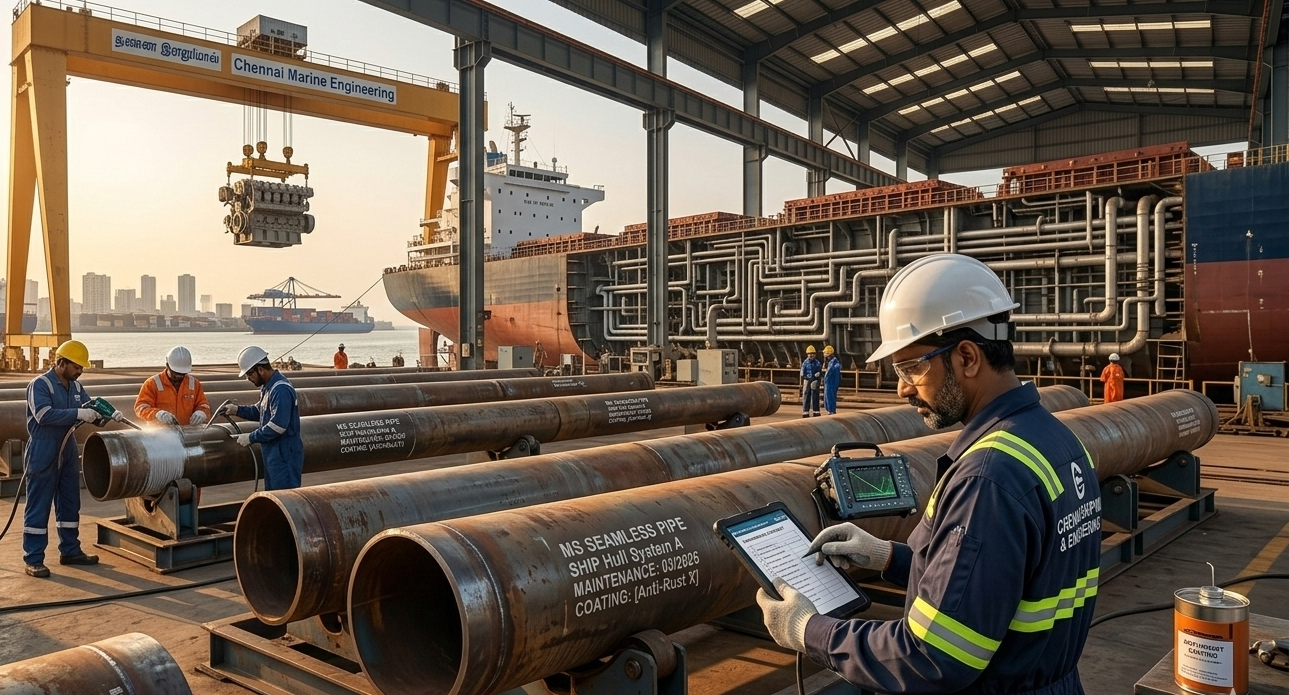
Everything You Need to Know About Mild Steel Seamless Pipe Maintenance for Ship Builders
Ships operate in some of the harshest environments on earth. Constant exposure to salt water, humidity, and high pressure makes the durability of a piping system a top priority. For shipbuilders, the seamless pipe is a vital component. Because these pipes have no welded seams, they offer superior strength. However, even the strongest seamless pipes require a strict maintenance schedule to prevent failure at sea. To keep these pipes in top shape, crews focus heavily on corrosion control. Saltwater is incredibly aggressive, so seamless pipes are often galvanized or coated with special protective layers. Even though the pipe itself is one solid, strong piece, the external surface must be regularly inspected for “pitting” tiny holes caused by salt that could eventually eat through the metal if left untreated. Beyond surface rust, maintenance also involves checking the vibration and pressure levels within the system. Because ships are constantly moving and engines are always vibrating, pipes can experience a lot of physical stress. Engineers perform routine pressure tests and check the support brackets to ensure that the seamless pipes remain perfectly aligned, preventing any cracks from forming during a long voyage across the ocean The Importance of MS Seamless Pipes in Shipbuilding Shipbuilders prefer a mild steel pipe because it can handle extreme internal pressures from hydraulic systems and fuel lines. Unlike welded pipes, a seamless pipe has a uniform structure. This means there are no weak joints that could burst under the stress of heavy waves or engine vibrations. Keeping these pipes in top condition is essential for the safety of the vessel and its crew. In addition to high pressure, these pipes must survive the constant “flexing” of a ship’s hull. As a vessel moves through heavy seas, the entire structure bends and twists; a seamless pipe is ideal here because it doesn’t have a longitudinal weld that could crack under this repetitive mechanical stress. This uniform strength ensures that vital fluids, like fuel and oil, keep flowing to the engines even in the middle of a storm. To maximize the life of these pipes, shipbuilders often use galvanized coatings or specialized paints to block out the corrosive sea air. Regular maintenance involves “ultrasonic testing,” where technicians use sound waves to check the thickness of the pipe walls from the outside. By catching thin spots early, the crew can replace a section of pipe during a scheduled port stay rather than dealing with a dangerous leak in the middle of the ocean. Step-by-Step Maintenance Guide for Shipbuilders 1. Initial Inspection Before Installation Maintenance starts the moment the mild steel seamless pipes arrive at the shipyard. You must check for surface rust or pitting caused during transport. Ensure the pipe ends are capped to prevent moisture and debris from entering the bore. Any small scratch on a seamless pipe can become a starting point for corrosion once the ship is in the water. 2. External Coating and Painting The primary defense against the ocean is a high-quality coating. For shipbuilders, this usually involves a marine-grade epoxy or zinc-rich primer. Since a ms pipe is made of carbon steel, it will oxidize quickly when exposed to salt air. Applying multiple layers of protective paint ensures that the metal stays dry and protected from the corrosive marine atmosphere. 3. Internal Cleaning and Flushing The fluids inside the pipes can be just as damaging as the sea outside. Fuel lines, ballast water lines, and fire mains must be flushed regularly. For ms pipes, it is important to remove any scale or sediment that could cause “under-deposit corrosion.” Using chemical inhibitors in the water can help form a protective film inside the mild steel seamless pipe. 4. Ultrasonic Thickness Testing (NDT) You cannot always see the damage inside a pipe. Shipbuilders use Non-Destructive Testing (NDT), specifically ultrasonic thickness gauging. This allows maintenance teams to measure the wall thickness of the seamless pipe without cutting it. If the pipe wall becomes too thin due to corrosion, it must be replaced before it fails under pressure. 5. Managing Marine Growth Pipes used for sea-water intake often suffer from biofouling. Barnacles and algae can grow inside the mild steel seamless pipes, causing blockages and increased pressure. Implementing an Electrolytic Anti-Fouling system can help protect your mild steel pipes from these biological threats. Why Regular Maintenance Saves Money Replacing a ms pipe while a ship is at sea is nearly impossible and very dangerous. Proactive maintenance during dry-docking is much cheaper than emergency repairs. By taking care of your ms seamless pipes, you extend the life of the vessel and reduce the risk of environmental leaks or mechanical breakdowns. Shipbuilders Maintenance Checklist To ensure the longevity of your piping systems, follow this detailed checklist designed specifically for maritime environments. Daily and Weekly Routine Checks Monthly Technical Reviews Annual and Dry-Dock Requirements A mild steel seamless pipe is an engineering marvel that provides the strength needed for modern shipping. However, the marine environment is relentless. For shipbuilders and vessel owners, a disciplined maintenance plan is the only way to ensure these ms pipes perform reliably for decades. From proper coatings to regular thickness testing, every step you take today prevents a crisis tomorrow. Secure Your Ship with High-Quality Piping Are you looking for durable ms pipes for your next shipbuilding project? We supply premium mild steel pipes that meet international maritime standards. Our team can also advise on the best coating and maintenance practices for your specific needs. Contact Black Buildtech today to get a quote and ensure your fleet is built to last. Frequently Asked Questions Why use a MS seamless pipe instead of a welded one on a ship? A MS seamless pipe has no joints, making it much stronger and more resistant to the vibrations and high pressures found in marine engines and hydraulic systems. How often should ship pipes be inspected? Critical systems should have a visual check weekly. A full technical inspection including thickness testing is usually done every year or during dry-docking. What
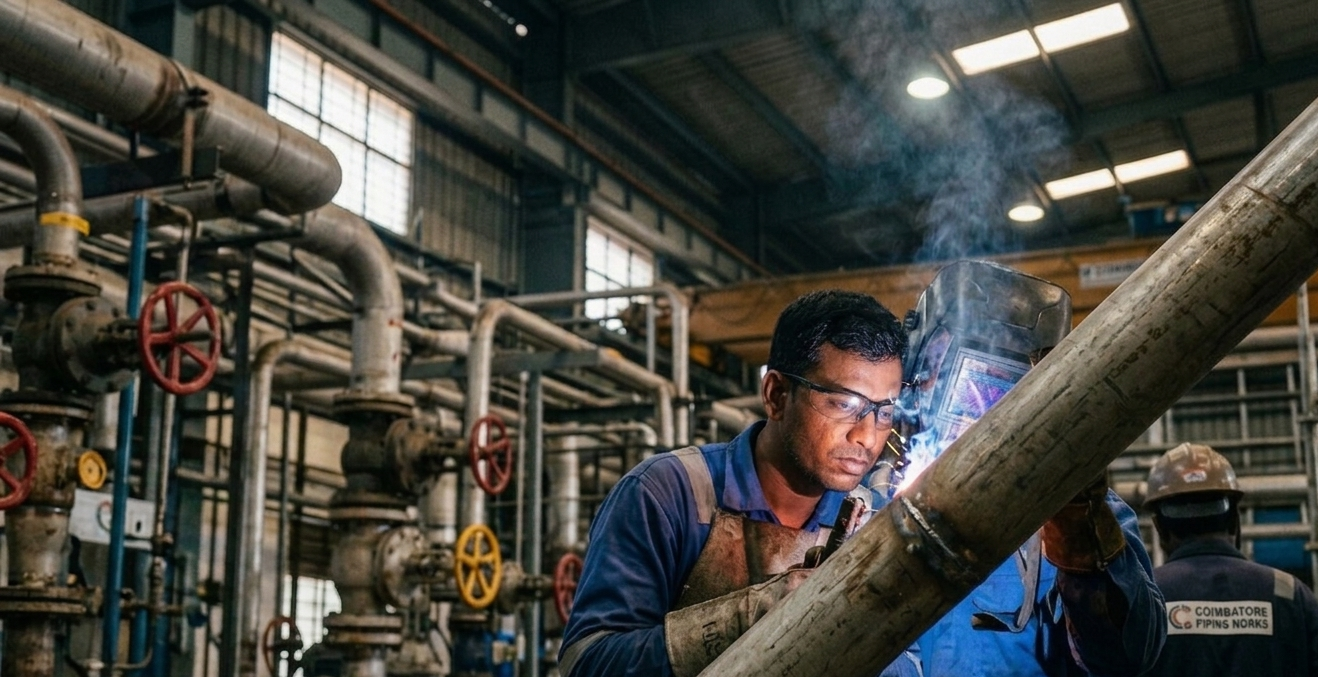
MS Seamless Pipe Installation and Welding Guide
When it comes to high-pressure fluid transport, structural integrity, and industrial durability, Seamless Pipes are the gold standard. Unlike welded pipes, which have a longitudinal seam that can act as a point of failure under stress, mild steel pipes are manufactured through a solid billet piercing process. This results in a uniform, high-strength cylinder capable of handling extreme environments. Whether you are working on a project in a major industrial hub like Coimbatore or setting up a refinery pipeline, understanding how to handle, install, and weld these pipes is critical for safety and longevity. Pre-Installation Inspection and Quality Control The success of your installation begins before the first weld is even struck. If you are sourcing seamless pipes, you must verify the quality to ensure they meet the project’s engineering specifications. The Micrometer Test As discussed previously, use a micrometer to check the wall thickness at the ends. Mild steel seamless pipes should show very little variance in thickness around the circumference. If one side is significantly thinner than the other (eccentricity), it indicates a low-quality manufacturing process. Weight Verification Always compare the physical weight of the pipe against the theoretical weight. Physical and Dimensional Verification Beyond wall thickness and weight, you must ensure the pipe’s geometry hasn’t been compromised during transit or storage. Surface Integrity and Visual Inspection While MS seamless pipes are rugged, they are susceptible to environmental and mechanical damage before they are even installed. Documentation and Traceability (The Paper Trail) In a safety-critical environment, a pipe is only as good as the paperwork that backs it up. Verification Tip: If a pipe lacks a Heat Number or the stencil is illegible, it should be quarantined immediately. In the world of refinery safety, “unidentified” is synonymous with “unsafe.” Preparation for Installation Proper preparation prevents 90% of failures in pipe systems. Follow these steps to prepare your ms seamless pipes in coimbatore for the layout: 1. Cutting the Pipe While mild steel seamless pipes are robust, they must be cut cleanly to ensure a good fit-up. 2. End Preparation (Beveling) For pipes with a wall thickness greater than 3mm, a V-bevel is required for full penetration welds. Step-by-Step Welding Guide for MS Seamless Pipes To ensure MS seamless pipes maintain their structural integrity in high-pressure refinery environments, the welding process must be executed with surgical precision. Improper welding doesn’t just lead to leaks; it creates localized weak points that can fail under thermal stress. 1. Preparation and Beveling Before cleaning, the pipe ends must be mechanically prepared to allow for full weld penetration. 2. Deep Cleaning and Contamination Control Mild steel is “forgiving,” but seamless pipes in refineries often transport volatile materials where porosity is a fatal flaw. 3. Precision Alignment (The Fit-Up) In a seamless system, internal misalignment (high-low) causes turbulence and erosion. 4. The Multi-Pass Welding Strategy A high-quality seamless pipe joint is never done in one go. It requires a layered approach: 5. Post-Weld Inspection and Cooling Safety Reminder: In a refinery, always ensure a “Hot Work Permit” is active and that the LEL (Lower Explosive Limit) has been tested before striking an arc. Support and Hanger Installation A heavy MS seamless pipe filled with liquid exerts massive force on its supports. Post-Welding Inspection and Testing Once the installation of your ms pipe system is complete, you must verify the integrity of the joints. 1. Visual Inspection Check for: 2. Non-Destructive Testing (NDT) For critical high-pressure lines: Common Mistakes to Avoid Even though our office is in Coimbatore, we regularly supply high-quality MS Seamless Pipes to Trichy. We handle the transportation from Coimbatore to Trichy, ensuring your project gets the best materials and expert technical support on time. Contact our Black Buildtech team today for a consultation on IBR-compliant piping solutions and professional welding guidance for your next project. Frequently Asked Questions Why are seamless pipes better than welded pipes for chemical plants? Seamless pipes have a uniform grain structure. Welded pipes have a seam that is often more susceptible to “preferential weld corrosion” in acidic environments. How often should I inspect MS Seamless pipes in an acid plant? For high-concentration areas, visual inspections should be weekly, and thickness testing (UT) should be performed at least every six months. What is the best coating for MS Seamless pipe in a corrosive environment? A three-coat system consisting of a zinc-rich epoxy primer, an epoxy mid-coat, and a polyurethane top-coat is the industry standard for chemical plants. Can mild steel handle sulfuric acid? Yes, but only in very high concentrations (above 90%) where it forms a protective “sulfate film.” In dilute concentrations, it will eat through Mild steel seamless pipes very quickly. What are the signs of internal pipe corrosion? Look for a decrease in flow pressure, discolored fluid (reddish/brown), or “pimple-like” bumps on the exterior of the pipe. What is “Pitting Corrosion”? Pitting is localized corrosion that creates small, deep holes. It is dangerous because it can cause a pipe to fail even if the rest of the pipe looks thick and healthy. How does temperature affect MS Seamless pipe corrosion? Higher temperatures generally speed up chemical reactions. For every 10-degree Celsius increase, the rate of acidic corrosion can nearly double. Is it safe to patch a leaking acid pipe? Only as a temporary emergency measure. For long-term safety, the damaged section of the MS Seamless pipe must be cut out and replaced. What is the role of a “sacrificial anode” in piping? In some cases, a more reactive metal (like zinc) is attached to the pipe. The acid attacks the zinc instead of the steel, protecting the pipe. How do I choose the right “Schedule” for my pipe? The “Schedule” refers to wall thickness. In chemical plants, engineers often choose a higher schedule (like Schedule 80 instead of 40) to provide an extra “corrosion allowance.” Can I use regular MS pipes for ship building? While regular mild steel is used, high-pressure lines and structural hull piping usually require Mild steel seamless pipes because they
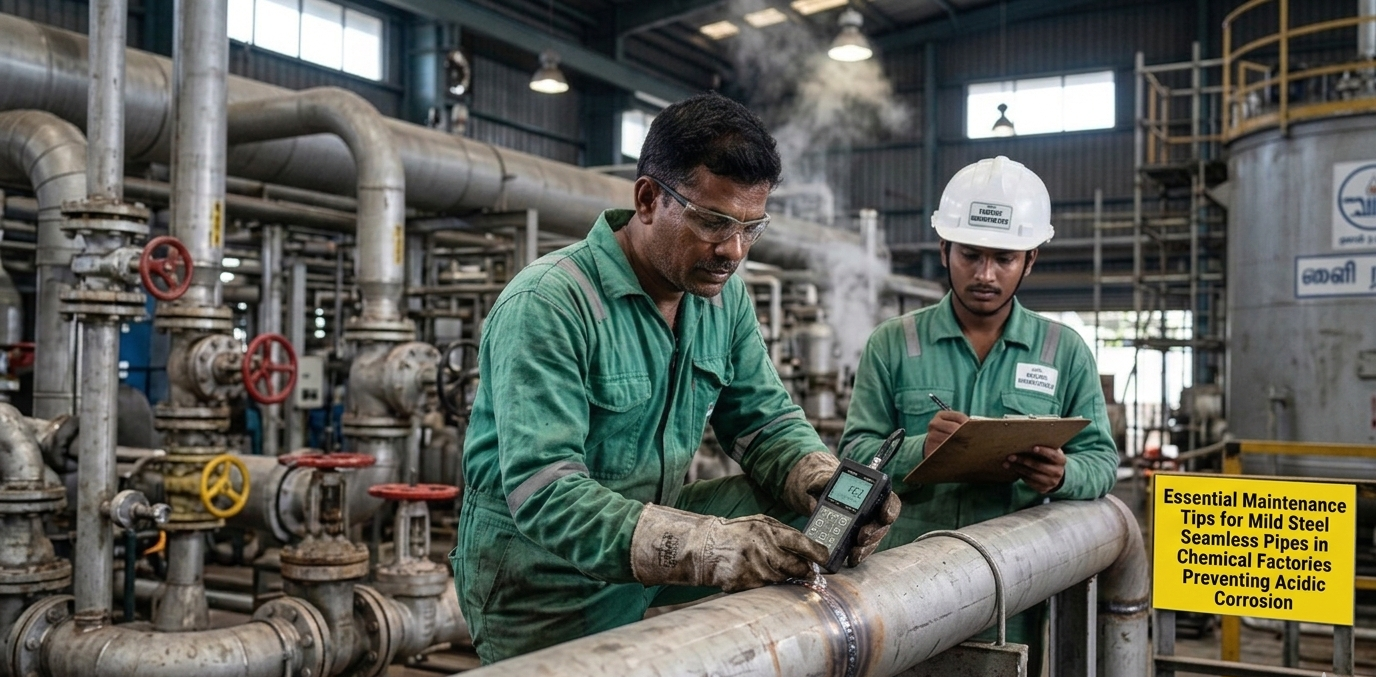
Essential Maintenance Tips for Mild Steel Seamless Pipes in Chemical Factories Preventing Acidic Corrosion
Chemical factories are some of the most punishing environments for industrial infrastructure. In these facilities, seamless pipes are often chosen for their strength and cost-effectiveness. However, their biggest enemy is acidic corrosion. Without a rigorous maintenance strategy, a high-pressure line can fail in a matter of months, leading to hazardous leaks and expensive downtime. This guide provides a comprehensive roadmap for maintaining your Mild Steel seamless pipes network to ensure it survives the harsh chemical processing landscape. Regular monitoring is also a non-negotiable part of the maintenance process. In a high-pressure chemical line, a small leak is never just a small leak; it is a warning sign of a systemic failure. By using ultrasonic thickness gauges, technicians can measure the internal wear of the mild steel pipe without needing to shut down the entire plant. This allows your team to identify “thin spots” caused by internal erosion or chemical reactions before they turn into a catastrophic burst. Finally, proper support and insulation management play a huge role in pipe longevity. In many chemical factories, moisture gets trapped between the pipe surface and its insulation a silent killer known as Corrosion Under Insulation (CUI). By ensuring that your MS seamless pipes are properly sealed and that the pipe stands are designed to prevent “metal-on-metal” rubbing, you can eliminate the hidden friction and moisture traps that cause premature failure. Taking these proactive steps ensures your infrastructure remains a reliable asset rather than a constant safety risk. How Acid Corrodes MS Pipes 1. The Power of External Protective Coatings 2. Creating a Barrier For pipes carrying concentrated acids, the steel alone is often not enough. Mild steel seamless pipes serve as the “strength member,” while an internal lining provides the “chemical resistance.” 3. Rigorous Ultrasonic Thickness (UT) Testing This internal degradation is often a silent killer in high-pressure systems because the uniform appearance of the exterior hides the structural decay occurring within. To accurately track the health of your mild steel seamless pipes, you must move beyond visual checks and employ specialized measurement techniques: 4. Managing Flow Velocity and Stagnation This interaction between fluid dynamics and chemical reactivity means that the longevity of mild steel seamless pipes is often dictated by the “flow profile” of the system. To prevent premature failure in high-pressure or high-acidity lines, you must manage these two extremes of fluid movement: 5. Inhibitor Dosing and pH Control Instead of only treating the symptoms of decay, you can chemically modify the environment inside your MS seamless pipes to stop the reaction at the molecular level. This approach focuses on the “process fluid” itself, turning a corrosive stream into a manageable one through the following methods: Is your chemical facility struggling with frequent pipe replacements? Don’t let acidic corrosion compromise your safety and profits. Our team specializes in supplying high-durability, MS Seamless Pipes and providing technical maintenance consultations tailored for the chemical industry. Contact our Engineering Experts today for a quote on premium MS Seamless pipe solutions. Frequently Asked Questions Why are seamless pipes better than welded pipes for chemical plants? Seamless pipes have a uniform grain structure. Welded pipes have a seam that is often more susceptible to “preferential weld corrosion” in acidic environments. How often should I inspect MS Seamless pipes in an acid plant? For high-concentration areas, visual inspections should be weekly, and thickness testing (UT) should be performed at least every six months. What is the best coating for MS Seamless pipe in a corrosive environment? A three-coat system consisting of a zinc-rich epoxy primer, an epoxy mid-coat, and a polyurethane top-coat is the industry standard for chemical plants. Can mild steel handle sulfuric acid? Yes, but only in very high concentrations (above 90%) where it forms a protective “sulfate film.” In dilute concentrations, it will eat through Mild steel seamless pipes very quickly. What are the signs of internal pipe corrosion? Look for a decrease in flow pressure, discolored fluid (reddish/brown), or “pimple-like” bumps on the exterior of the pipe. What is “Pitting Corrosion”? Pitting is localized corrosion that creates small, deep holes. It is dangerous because it can cause a pipe to fail even if the rest of the pipe looks thick and healthy. How does temperature affect MS Seamless pipe corrosion? Higher temperatures generally speed up chemical reactions. For every 10-degree Celsius increase, the rate of acidic corrosion can nearly double. Is it safe to patch a leaking acid pipe? Only as a temporary emergency measure. For long-term safety, the damaged section of the MS Seamless pipe must be cut out and replaced. What is the role of a “sacrificial anode” in piping? In some cases, a more reactive metal (like zinc) is attached to the pipe. The acid attacks the zinc instead of the steel, protecting the pipe. How do I choose the right “Schedule” for my pipe? The “Schedule” refers to wall thickness. In chemical plants, engineers often choose a higher schedule (like Schedule 80 instead of 40) to provide an extra “corrosion allowance.”
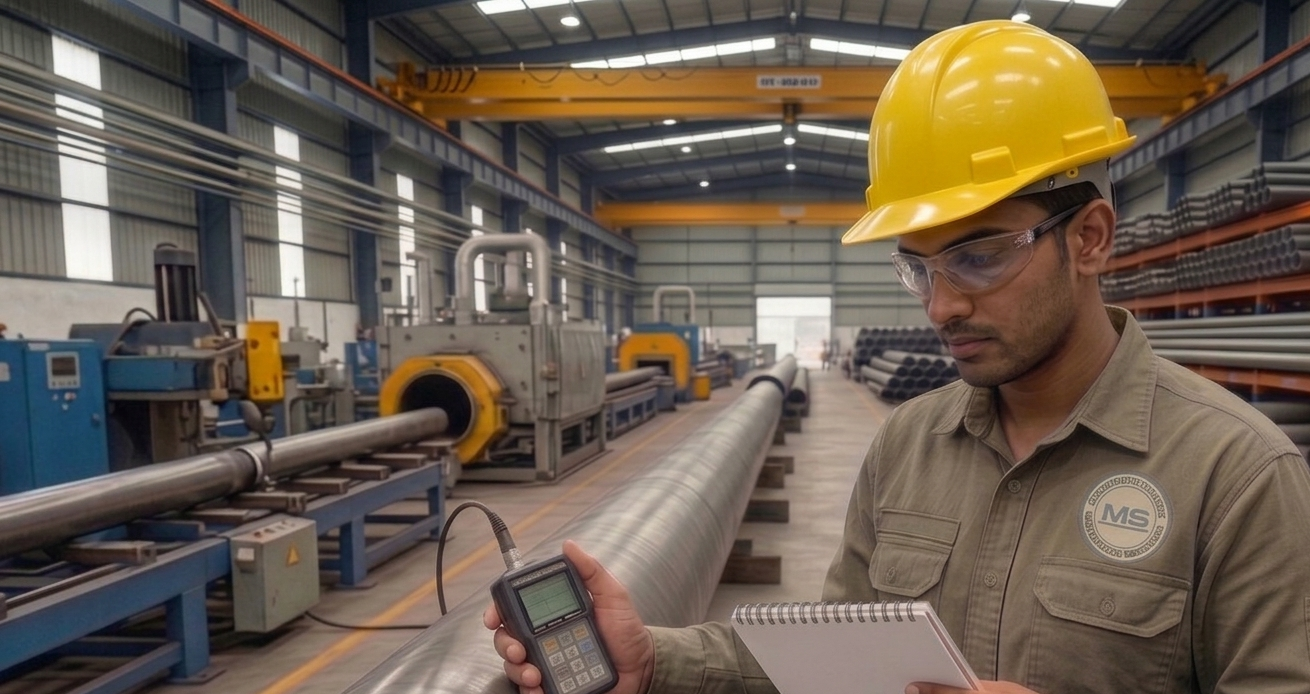
How to Identify Genuine MS Seamless Pipes A Checklist for Junior Procurement Engineers
For a junior procurement engineer, the responsibility of sourcing seamless pipes can be daunting. In industries like power generation, oil and gas, and chemical processing, the integrity of a piping system is non-negotiable. Using a sub-standard or counterfeit pipe can lead to catastrophic failures, legal liabilities, and massive financial losses. The market is unfortunately flooded with “fakes” , often ERW (Electric Resistance Welded) pipes that have been polished or “bead-removed” to look like seamless ones. This guide provides a professional checklist to ensure the Seamless pipes you procure are 100% genuine and fit for purpose. To identify these deceptive “bead-removed” pipes, your first line of defense is a detailed Internal Visual Inspection. While the exterior of a counterfeit pipe may be polished to perfection, the interior often tells a different story. Use a high-intensity flashlight or a borescope to examine the internal wall; genuine MS seamless pipes will have a consistent, slightly rough “orange peel” texture or a smooth, uniform finish throughout. In contrast, a fake seamless pipe which is actually a welded ERW pipe will often show a faint, straight longitudinal line where the internal weld bead was mechanically scraped away. Even with advanced polishing, this “shadow line” or a slight change in the grain reflection usually remains visible to a trained eye. Beyond visual cues, the most definitive proof of authenticity lies in the Mill Test Certificate (MTC) and Heat Number Traceability. Every genuine seamless pipe is stamped or stenciled with a unique “Heat Number” that must correspond exactly to the MTC provided by the manufacturer. Ensure the MTC is a “Type 3.1” certificate according to EN 10204 standards, which guarantees that the specific batch was tested and verified by the mill’s independent Q.A. department. As a procurement engineer, you should cross-verify the chemical composition (specifically carbon and manganese levels) and mechanical properties like tensile strength and elongation against the required ASTM or API standards. If a supplier cannot provide a clear, traceable link between the physical pipe and its certification, the material should be rejected immediately to avoid the risk of catastrophic structural failure. The Core Difference: Why Seamless Matters Before diving into the checklist, it is vital to understand what makes a Mild steel seamless pipe unique. Unlike welded pipes, which are formed from a flat plate and joined at a seam, seamless pipes are created by piercing a solid steel billet. This process results in a pipe that has no joints and a uniform metallurgical structure. This uniformity allows it to handle significantly higher pressures and temperatures, making it the “Gold Standard” for critical industrial lines. Step 1: The Visual Inspection Checklist Your first line of defense is a thorough physical inspection. Genuine MS Seamless pipes have distinct characteristics that are hard to replicate. Step 2: Mastering the Mill Test Report (MTR) As a procurement engineer, the paperwork is as important as the metal. Every batch of Mild steel seamless pipes must come with an MTR. Step 3: Physical Marking and Stamping Standards like ASTM A106 or API 5L dictate how pipes must be marked. Step 4: Dimensional Verification Don’t just trust the markings; verify them with tools. Red Flags for Procurement Engineers When sourcing MS seamless pipes, certain warning signs indicate that the material may be counterfeit or substandard. If you notice these red flags, stop the transaction immediately to protect your project’s safety and budget: The Environmental Factor: Storage and Handling Even a genuine Mild steel seamless pipe can be ruined by poor handling. In humid regions like Coimbatore or Chennai, pipes stored on bare soil will undergo “pitting corrosion.” Ensure the pipes you procure were stored on wooden dunnage and have protective end-caps. This ensures the internal bore remains clean and free of debris before it reaches your project site. Are you looking to secure high-quality, 100% verified MS Seamless pipes for your next project? Procurement doesn’t have to be a gamble. Partner with a supplier that provides full traceability and IBR certification. Contact our Black Buildtech team today for a free consultation on material verification and a quote for your industrial piping needs. Frequently Asked Questions How can I tell the difference between seamless and ERW pipes? Seamless pipes have no longitudinal weld seam. You can check this by looking at the internal bore or using ultrasonic testing to find variations in wall thickness that would indicate a weld joint. Is MS Seamless pipe the same as carbon steel pipe? “Mild Steel” is a type of carbon steel with low carbon content. While most Mild steel seamless pipes are carbon steel, not all carbon steel pipes are seamless. “Seamless” refers to the manufacturing method. What is the most common grade for MS Seamless pipes? ASTM A106 Grade B is the most widely used grade for high-temperature and high-pressure applications in industries like power plants and refineries. Why are seamless pipes more expensive than welded ones? The manufacturing process heating a solid billet and extruding it requires more energy and specialized machinery compared to the rolling and welding process used for ERW pipes. What is an IBR Certificate? An IBR (Indian Boiler Regulations) certificate confirms that the pipe has been manufactured and tested according to the strict safety standards required for steam-bearing systems in India. Can a seamless pipe have surface defects? Yes, minor surface “scabs” or mill scales are normal. However, deep cracks, pits, or “slivers” are grounds for rejection as they act as stress concentrators. What tools do I need for on-site pipe inspection? A junior engineer should carry a measuring tape, a Vernier caliper (for outer diameter), an Ultrasonic Thickness Gauge, and a high-intensity flashlight. Does “Seamless” mean the pipe won’t rust? No. Mild steel will rust if exposed to moisture and oxygen. However, seamless pipes are often preferred because they do not suffer from “weld decay” or preferential corrosion at the seam. What should I check first on a Mill Test Report? Check the “Heat Number” first. If the number on the paper doesn’t match the number
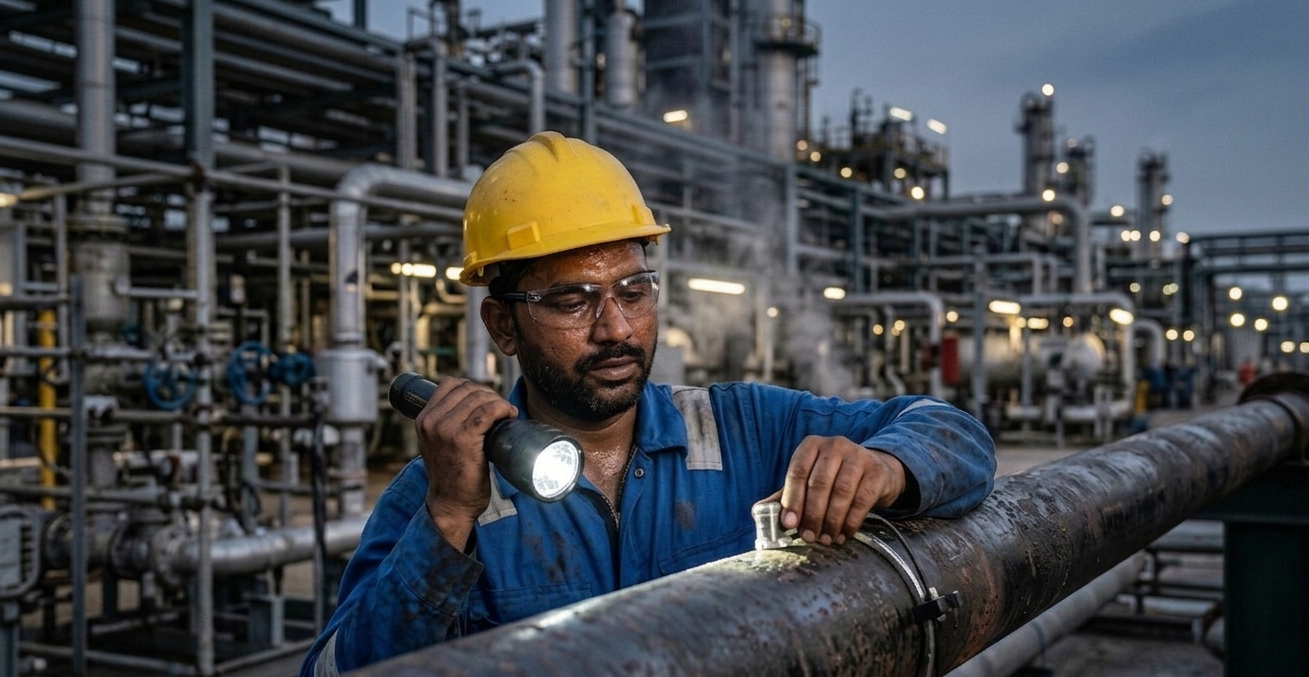
Top 5 Common Troubles with MS Seamless Pipes and How to Fix Them On-Site
Ms seamless pipes in salem are the backbone of modern industrial infrastructure. Whether you are operating a power plant in Mettur or a textile processing unit in Tiruppur, the reliability of your piping system is non-negotiable. Unlike welded pipes, a mild steel seamless pipe is manufactured through a piercing process that eliminates the longitudinal seam. This makes it significantly stronger and better suited for high-temperature and high-pressure environments. However, even the highest grade seamless pipes can encounter issues during storage, installation, or operation. Understanding how to identify and fix these troubles on-site can save your project from expensive downtime and safety hazards. Here is a detailed look at the five most common troubles and their professional solutions. 1. Surface Pitting and Atmospheric Corrosion Even though a mild steel seamless pipe is known for its durability, it is still susceptible to oxidation. If pipes are stored in open yards near coastal areas or high-humidity zones like Trichy, they can develop surface pitting. Pitting is particularly dangerous because it creates small holes that can eventually lead to pinhole leaks under high pressure. To fix surface corrosion, engineers must first perform a “Visual Inspection and Pit Depth Measurement.” If the pitting depth is within the allowable limit of the pipe’s wall thickness (usually 12.5 percent of the nominal wall), the surface can be restored. Use a power wire brush or sandblasting to remove all rust until the “white metal” is visible. Immediately after cleaning, apply a high-quality zinc-rich primer or an epoxy coating to prevent further oxygen contact. For pipes used in chemical environments, a coal tar enamel coating is often the best choice for long-term protection. 2. Dimensional Inaccuracies and Ovality When working with large diameter MS seamless pipes in salem, site engineers often find that the pipe ends are not perfectly round. This is known as ovality. This trouble usually occurs during heavy handling or improper stacking at the site. If the pipe is out of round, it becomes nearly impossible to achieve a perfect butt-weld joint, leading to weak spots in the pipeline. For minor ovality, a hydraulic pipe expander or a “rounding clamp” can be used on-site to push the pipe walls back into the correct circular shape. If the pipe wall is very thick, such as SCH 80 or SCH 160, you may need to apply gentle, controlled heat to the area before using the clamp. Always ensure that the temperature does not exceed the critical limit of the steel to avoid changing its grain structure. Using internal line-up clamps during the welding process is the most effective way to manage dimensional variations during installation. 3. Weldability Issues and Improper Edge Preparation One of the most frequent complaints on-site is “root cracking” or “porosity” during the welding of mild steel seamless pipes. This is rarely a fault of the steel itself but is often caused by moisture or impurities trapped in the bevel area. Since seamless pipes are often coated with a layer of varnish or “mill oil” to prevent rust during transit from Coimbatore to your site, this oil can contaminate the weld pool if not removed. The secret to a perfect weld on seamless pipes is meticulous edge preparation. Use a portable beveling machine to create a clean 37.5 degree angle on the pipe ends. Ensure that at least 25mm of the area surrounding the joint is cleaned with a solvent to remove all oils and grease. If you are working in a damp environment, use an oxy-acetylene torch to “pre-heat” the joint area to approximately 100 degrees Celsius. This drives out moisture and prevents hydrogen-induced cracking, ensuring a high-strength joint that meets IBR standards. 4. Internal Scaling and Mill Scale Blockages During the hot-rolling process of manufacturing mild steel seamless pipes, a thin layer of iron oxide called “mill scale” forms on the internal surface. Over time, in high-velocity steam or water lines, this scale can peel off and clog sensitive valves, pumps, or spray nozzles. This is a major concern for the pump and valve industry in Coimbatore. For pipes already installed, “System Flushing” is the most common remedy. However, for a more thorough fix before commissioning, mechanical descaling using a “pipe pig” or a rotary wire brush tool is recommended. If the scale is stubborn, a mild chemical pickling solution can be circulated through the pipes followed by a neutralizing flush. This ensures that the internal bore is smooth, reducing friction loss and protecting your expensive downstream equipment from damage. 5. Improper Handling Damage (Dents and Gouges) During the transportation of mild steel seamless pipes from the warehouse to a remote project site in Salem or Trichy, pipes can suffer from mechanical damage. Deep gouges or dents act as “stress concentrators.” Under the constant vibration and pressure of an operating plant, these small dents can become the starting point for a catastrophic pipe burst. Every dent must be measured. According to most engineering codes, a dent that exceeds 6 percent of the pipe diameter or contains a scratch or gouge must be addressed. If the damage is at the end of the pipe, the best fix is to “crop” or cut off the damaged section and re-bevel the end. If the damage is in the middle of a long span, a “full-encirclement repair sleeve” can be welded over the area to reinforce the pipe wall. Never attempt to “hammer out” a dent, as this causes work-hardening and makes the steel brittle. Why “On-Site” Fixes Matter When we talk about an “On-Site Fix,” we are not suggesting “quick and dirty” repairs. In the context of MS Seamless Pipes, on-site fixes are about Stabilization and Safety. For a refinery in Manali or a shipbuilder in Chennai, stopping a line for one hour can cost lakhs in production. By using techniques like Composite Wrapping or Pit Blending, you are essentially performing “Industrial First Aid.” These methods prevent the “trouble” from escalating into a “failure.” However, always ensure that any repair on an IBR (Indian Boiler
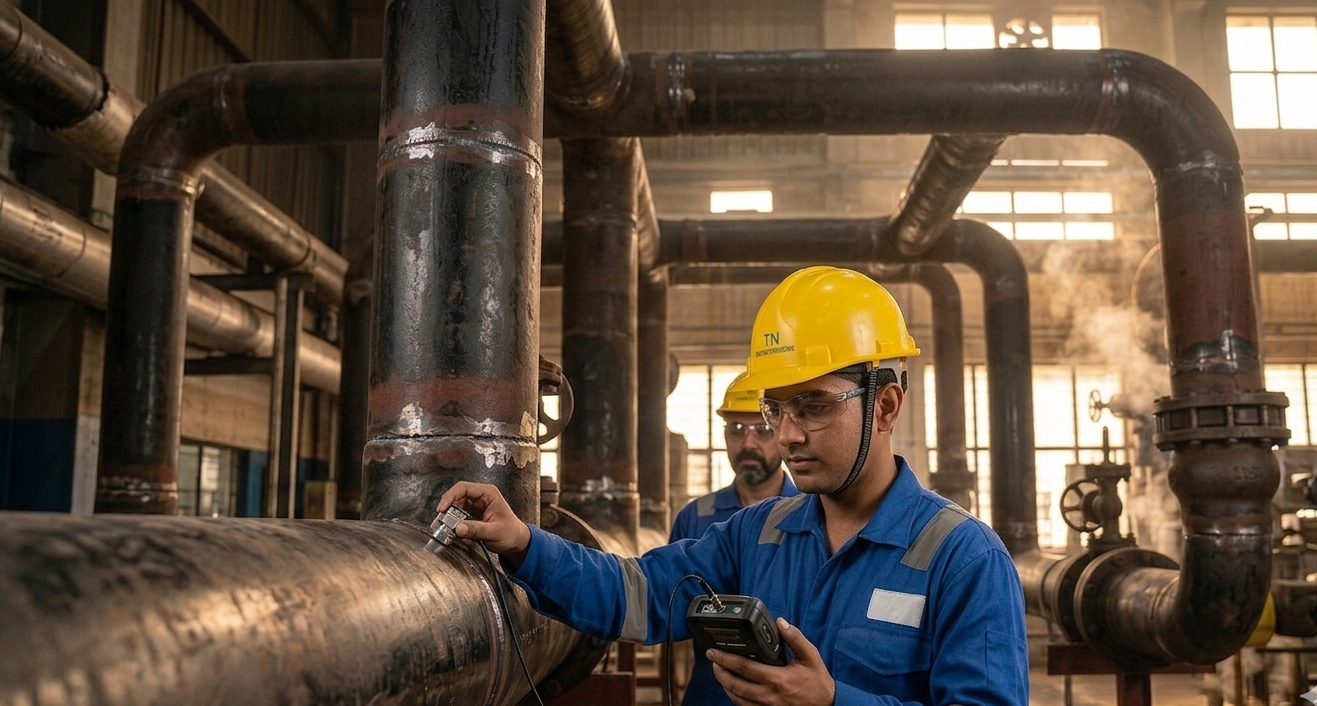
Why Mild Steel Seamless Pipes are the Gold Standard for High-Temperature Steam Lines in TN Industries
In the industrial corridors of Tamil Nadu stretching from the thermal power hubs of Thoothukudi to the massive refineries in Manali steam is the lifeblood of production. However, steam at high temperatures is not just a utility; it is a high-energy force that puts immense stress on its containers. In this demanding environment, Seamless Pipes have emerged as the undisputed gold standard. While there are many piping options available, the unique manufacturing process and metallurgical properties of seamless mild steel make it the only logical choice for high-pressure steam conveyance. This guide explains why “Seamless” is synonymous with “Safety” in the TN industrial landscape. In simple terms, a seamless pipe is superior because of how it is made. Most pipes are made by rolling a flat sheet of steel into a circle and welding the edges together. However, a mild steel seamless pipe is made by piercing a solid red-hot cylinder of steel. This means there is no joint or “seam” anywhere on the pipe. In the busy factories of Tamil Nadu, from the textile mills in Tirupur to the sugar factories in Trichy, steam is used at very high pressures. If you use a pipe with a weld, that weld is a weak spot. Under high heat, that weak spot can crack or burst, which is extremely dangerous for the workers nearby. Because ms pipes have no weak spots, they can handle the heavy stress of hot steam without breaking. Using mild steel pipes also saves a lot of money for TN industries. Steam leaks are very expensive because they waste the fuel used to run the boilers. A tiny leak can cost a factory lakhs of rupees over a year. Since seamless pipes are much stronger and do not have seams that split, the risk of these expensive leaks is very low. 1. The “Zero Weak Point” Philosophy The primary reason MS Seamless Pipes are preferred over welded (ERW) pipes is their structural uniformity. Welded pipes are made by rolling a flat plate and joining the edges. No matter how high the weld quality, the seam remains a “heat-affected zone” with a different molecular structure than the rest of the pipe. In high-temperature steam lines, metal expands and contracts. This thermal cycling can cause “seam fatigue,” where the weld joint eventually develops micro-cracks. Seamless pipes, being extruded from a single solid billet, have a continuous grain structure. This means there is no “weakest link,” allowing the pipe to handle internal pressure equally at every degree of its circumference. 2. High Temperature Resilience: The ASTM A106 Factor 3. IBR Compliance: The Legal and Safety Mandate The Indian Boiler Regulations act as a shield, ensuring that every MS seamless pipe used in a factory can handle the heavy burden of high-pressure steam. In the eyes of the Tamil Nadu Boiler Directorate, a mild steel pipe is superior because its strength is equal at every single point of its diameter. This uniform strength allows engineers to use these pipes with total confidence during high-stress operations. 4. Superior Flow Characteristics High-temperature steam moves at high velocities. In welded pipes, the internal “bead” (the ridge left by the weld) can cause turbulence. Over time, this turbulence leads to erosion-corrosion, where the steam literally “sandblasts” the internal walls of the pipe. MS Seamless Pipes feature a smooth, unobstructed internal bore. This allows for: 5. Managing the “Coastal Corrosion” Challenge Tamil Nadu’s heavy industries are often located near the coast (Chennai, Ennore, Cuddalore). The salt-laden air is a nightmare for mild steel. However, Mild steel Seamless pipes have a distinct advantage here too. Because the surface of a seamless pipe is smooth and lacks the metallurgical irregularities of a weld seam, it is less prone to localized pitting. When treated with proper anti-corrosive coatings or simple black bitumen, these pipes offer a much longer service life in humid, coastal environments compared to welded alternatives. 6. Reliability in Critical Sectors Is your facility due for a steam line upgrade or an IBR inspection? Don’t compromise on safety with sub-standard materials. Ensure your system meets the highest industrial benchmarks with our premium, MS Seamless Pipes. Request a quote today or consult with our technical team to find the perfect pipe schedule for your high-temperature application. Frequently Asked Questions Why is a seamless pipe better for steam than a welded pipe? Seamless pipes do not have a weld joint, which is traditionally the weakest part of a pipe. Under the high pressure and heat of steam, a weld seam is more likely to fail or corrode. What does “ASTM A106 Grade B” mean? It is the standard specification for seamless carbon steel pipe for high-temperature service. Grade B is the most common version, offering high tensile strength and excellent weldability for industrial use. Is MS Seamless Pipe mandatory for all power plants in Tamil Nadu? While not “mandatory” for every single pipe, it is highly recommended and often required by IBR for any line carrying high-pressure steam (above 3.5 kg/cm²) for safety and legal compliance. How long do MS Seamless Pipes last in a steam line? In a well-maintained system with proper water chemistry and external corrosion protection, these pipes can last 20 to 30 years. Can I use MS Seamless Pipes for cooling water lines too? Yes, they are excellent for water lines, but they are often considered “over-engineered” for that purpose. Welded (ERW) pipes are usually more cost-effective for low-pressure water systems. What is the difference between “MS” and “Carbon Steel” pipes? In the industry, the terms are often used interchangeably. Mild Steel is a type of carbon steel with a low carbon content (usually up to 0.25%). ASTM A106 is a high-quality version of carbon steel designed for pressure. Does the Tamil Nadu Boiler Directorate inspect these pipes? Yes. If your system falls under IBR purview, the Directorate will check the material certificates (Form III-A) and may perform physical inspections like hydro-testing. How can I tell if a pipe is truly seamless? Look at
Best MS Seamless Pipe Dealers in Coimbatore for the Pump and Valve Industry
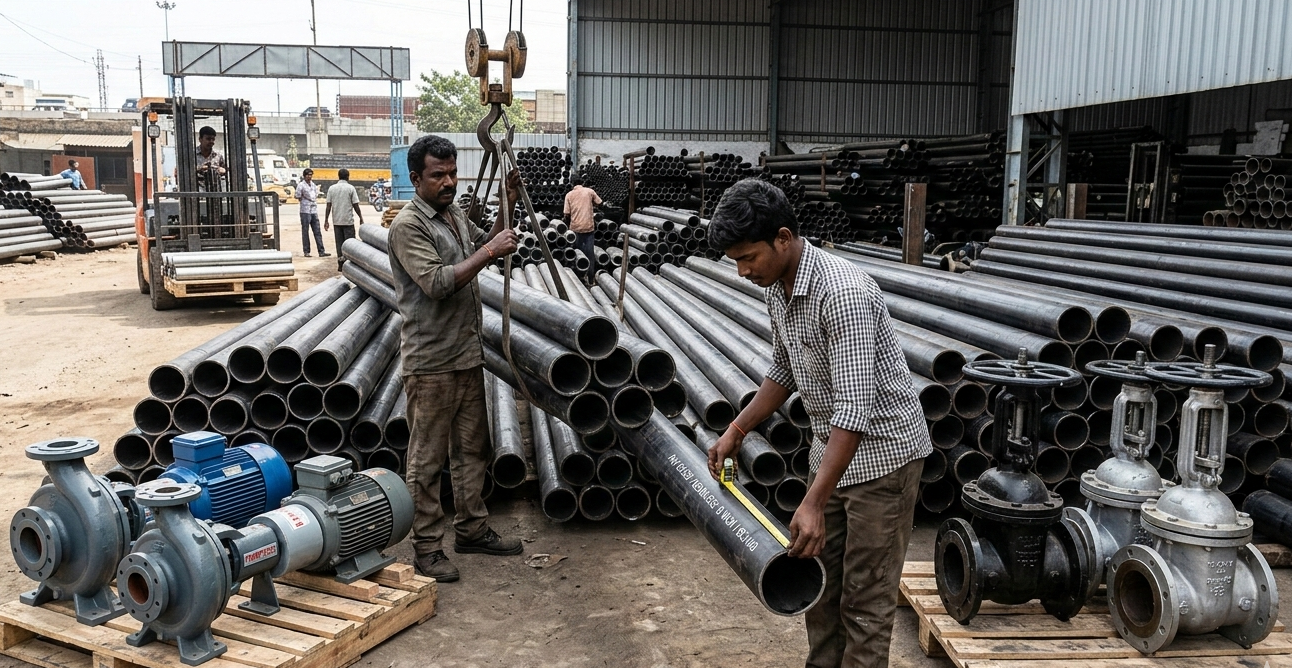
Coimbatore is often called the “Pump City of Asia.” For decades, it has produced over 40% of India’s pumps and a significant portion of its industrial valves. To maintain this reputation, manufacturers require materials that can withstand extreme pressures and corrosive fluids. This is where Seamless pipes come into play. Selecting the right seamless pipe is not just about cost; it is about the safety and efficiency of the final product. The pump and valve industry in Coimbatore demands materials that offer zero-leakage reliability under high-pressure cycles. Unlike welded pipes, Mild Steel Seamless pipes are manufactured without a longitudinal seam, providing a uniform grain structure that eliminates the risk of “seam failure” during hydraulic surges. For local manufacturers producing centrifugal pumps or high-pressure gate valves, using seamless piping ensures that the housing and connector lines can handle the intense mechanical stresses of fluid transport without cracking or deforming over time. Proximity to reliable dealers is a strategic advantage for Coimbatore’s industrial hubs like Thudiyalur and Arasur. Leading dealers in the region specialize in stocking pipes, which are the industry standards for temperature resistance and tensile strength. By sourcing from established local distributors, pump and valve makers can verify “IBR” (Indian Boiler Regulations) certifications on-site, ensuring that every meter of pipe meets the stringent safety codes required for both domestic and international exports. Ultimately, the synergy between precision engineering and high-grade raw materials is what keeps Coimbatore at the forefront of the global market. Selecting a dealer who offers value-added services such as precision cutting, beveling for welding readiness, and protective anti-corrosive coating allows manufacturers to reduce lead times and assembly costs. For a sector where a single component failure can halt an entire utility plant, partnering with a trusted seamless pipe supplier is the ultimate insurance policy for quality and performance. The Structural Superiority of Seamless pipes Unlike welded pipes, which are formed by rolling a plate and joining the seam, seamless pipes are created through an extrusion process that results in a continuous, homogenous tube. This lack of a longitudinal weld point offers several critical advantages for heavy-duty applications: The Superior Choice – MS Seamless Pipe for Industrial Use Why Quality Matters in the Pump and Valve Sector Finding the Best MS Seamless Pipe Dealers in Coimbatore When searching for a dealer, you need a partner that understands technical specifications. It has emerged as a leading name for industrial buyers in the region. They provide high-quality MS pipes that are fully certified and ready for heavy-duty applications. A reliable dealer should offer: 1. Minimizing Lead Times In the fast-paced industrial hubs of Coimbatore, “time is money,” and waiting weeks for materials can stall an entire production line. A dealer with a massive on-site inventory allows for: 2. Providing Mill Test Reports A reliable partner never hides behind “delayed paperwork” because the certificate is considered part of the product itself. 3. Cut to Length and Specific Schedules Industrial requirements rarely fit “off-the-shelf” standard lengths, and using the wrong wall thickness can compromise an entire system. Claim Your Free Technical Consultation & Custom Quote Don’t let lead times stall your production. Call us or click above to get Coimbatore’s most reliable piping solutions delivered to your site. Frequently Asked Questions What is the difference between MS Seamless and ERW pipes? MS Seamless pipes are manufactured from a solid steel billet without any welding seams, making them stronger and ideal for high-pressure applications. ERW (Electric Resistance Welded) pipes are formed by welding the longitudinal edges of a steel plate. Who is the best dealer for MS Seamless pipe in Coimbatore? Black Build Tech is a leading supplier in Coimbatore, known for an extensive inventory of industrial-grade piping specifically suited for pump and valve manufacturing. What are the common grades for Mild steel seamless pipes? The standard industrial grades are ASTM A106 Grade B (preferred for high-temperature service) and ASTM A53 (suitable for general fluid transmission and low-pressure use). Why are seamless pipes used in pump manufacturing? They provide superior pressure integrity and a smooth internal bore. This minimizes friction and turbulence, ensuring maximum fluid flow efficiency in pump systems. Does Black Build Tech provide IBR certified pipes? Yes, Black Build Tech supplies IBR (Indian Boiler Regulations) certified pipes, which are mandatory for high-pressure steam and boiler applications in the Coimbatore industrial belt. How do I check the quality of a Mild steel seamless pipe? Always verify the Mill Test Report (MTR) from your dealer. This certificate details the chemical composition and mechanical strength, ensuring the pipe meets your technical specifications. What is the price of MS Seamless pipes in Coimbatore? Pricing is determined by the current steel market rate and the weight (per kg). For the most accurate and up-to-date quotes, it is best to contact Black Build Tech directly. Are these pipes corrosion-resistant? While mild steel is susceptible to oxidation, durability can be significantly improved using galvanization, black bitumastic paint, or specialized epoxy coatings for wet environments. Can I get custom lengths for MS Seamless pipes? Yes, precision cutting services are available to provide custom lengths, which is particularly useful for specific valve assembly and pipeline configurations. What sizes are available for industrial MS pipes? Standard stock sizes range from 1/2 inch up to 24 inches in diameter, with various wall thickness schedules (SCH 40, 80, etc.) available for immediate delivery.
How to Select Wall Thickness (SCH 40/80) for Mild Steel Seamless Pipes in Coimbatore
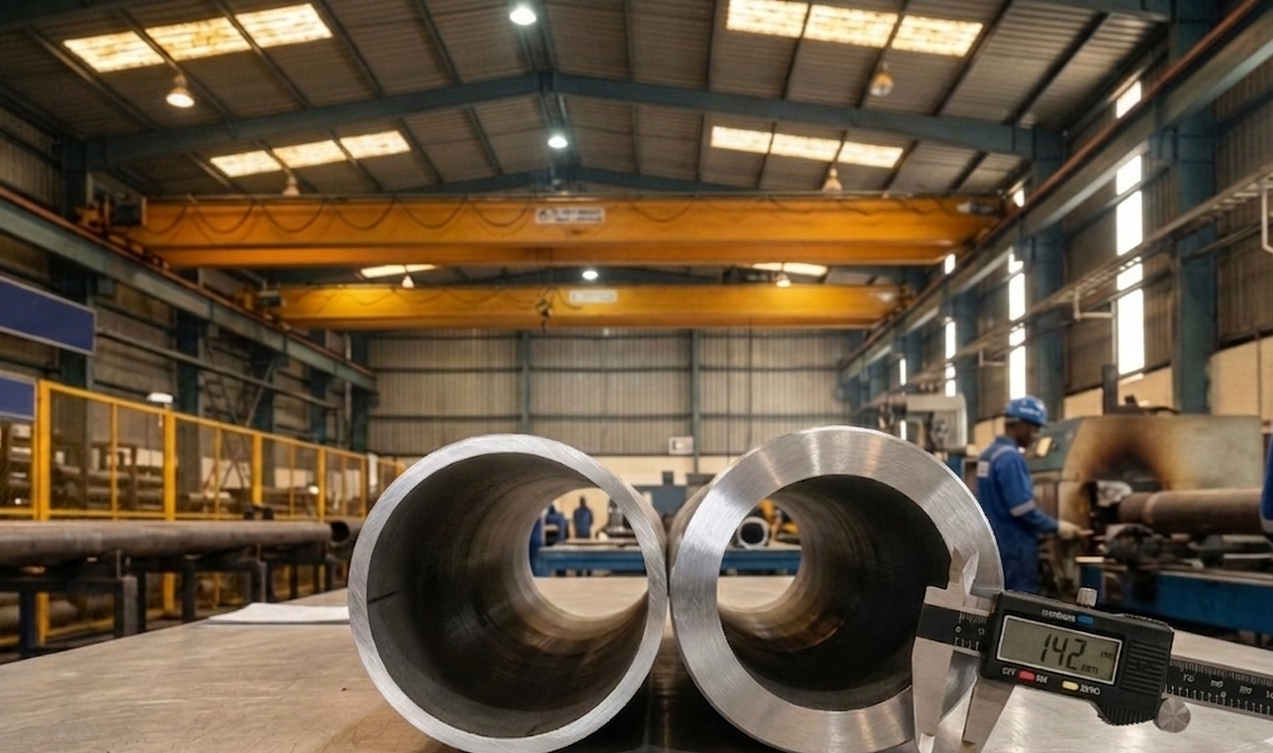
Selecting the correct wall thickness for your piping system is one of the most significant decisions in any engineering project. In a fast-growing industrial hub like Coimbatore, where sectors range from high-pressure pump manufacturing to complex textile processing, the integrity of your fluid transport system depends on the “Schedule” of your pipe. When we talk about Seamless Pipes, the term “Schedule” (often abbreviated as SCH) refers to the wall thickness. It is a common misconception that the schedule stays the same across all sizes. In reality, as the pipe diameter increases, the actual thickness for a specific schedule also changes Understanding the Basics of Pipe Schedules To select the right thickness, you first need to understand that MS Pipes are categorized by their Nominal Pipe Size (NPS) and their Schedule. The schedule number is roughly related to the pressure-holding capacity of the pipe. SCH 40 is considered the “Standard” weight. It is the most widely used thickness for low to medium-pressure applications. SCH 80 is known as “Extra Heavy.” It has a thicker wall, which allows it to handle significantly higher pressures and provides a greater margin of safety against internal and external wear. SCH 40 vs. SCH 80: The Technical Differences The primary difference between these two is the internal diameter. For a 2-inch Mild Steel Seamless Pipe, the outer diameter (OD) remains the same regardless of the schedule. However, because the wall of an SCH 80 pipe is thicker, its internal diameter (ID) is smaller than that of an SCH 40 pipe. Key Factors in Selecting Wall Thickness 1. Internal Operating Pressure Pressure is the most critical factor. Every Mild Steel Seamless Pipes has a maximum allowable working pressure. If your pump system in Coimbatore operates at 400 PSI, using an SCH 40 pipe might be “pushing the limit” depending on the temperature, whereas SCH 80 would provide a comfortable safety buffer. Always check the pressure rating tables provided by manufacturers or international standards like ASME B36.10. 2. Corrosion and Erosion Allowance Coimbatore’s industrial environment often involves water with high mineral content or chemical additives in textile dyeing. Over time, the internal surface of a Mild Steel Pipe will corrode.If you choose a thinner wall (SCH 40), a corrosion loss of 1mm could represent 20% of the pipe’s strength. If you choose a thicker wall (SCH 80), that same 1mm loss might only represent 10% of the strength. Therefore, for lines that are difficult to replace or carry corrosive fluids, SCH 80 is the “Gold Standard” for longevity. 3. Temperature Variations As the temperature of the fluid (like steam in a textile mill) increases, the strength of the mild steel decreases. A pipe that can handle 500 PSI at room temperature may only safely handle 300 PSI at 200°C. For high-temperature applications, engineers in Coimbatore usually upgrade to a higher schedule to compensate for this loss of metal strength. Coimbatore Industry Applications The Pump and Agriculture Sector Coimbatore is world-renowned for pump manufacturing. For suction and delivery lines in agricultural setups, MS seamless Pipes of SCH 40 are usually sufficient. They offer a balance of durability and weight, making them easy to install in deep-well scenarios without putting excessive strain on the lifting equipment. Textile and Dyeing Units Textile units require massive amounts of steam. These steam lines operate under high pressure and constant thermal cycling. Using Seamless Pipes with an SCH 80 rating is common for main steam headers. The extra thickness prevents “sagging” of long pipe runs and provides better resistance to the high-velocity steam that can erode thinner pipe walls. Structural and Engineering Projects In heavy fabrication and foundry work, pipes are often used as structural columns or supports. Here, the “Schedule” represents the load-bearing capacity. SCH 80 pipes provide superior rigidity and are less likely to buckle under heavy mechanical stress compared to their thinner counterparts. How to Calculate: A Simplified Approach While professional engineers use complex software, a simple way to estimate is using Barlow’s Formula: $$P = \frac{2St}{D}$$ By rearranging this, you can find the minimum thickness (t) required for your specific pressure (P). If the calculated thickness is 4.5mm and SCH 40 is only 3.9mm, you must move up to SCH 80 (typically 5.5mm for that size) to remain safe. Sourcing in Coimbatore: What to Look For 1. The “Visual and Surface” Audit Seamless pipes are manufactured by piercing a solid billet, whereas ERW (Electric Resistance Welded) pipes are made from flat strips welded together. 2. Deep Dive into Wall Thickness (The Micrometer Test) As you mentioned, consistency is king. However, you should check more than just the ends. 3. Understanding the Weight to Schedule Relationship You mentioned SCH 80 vs. SCH 40. It’s helpful to have the theoretical weight formula handy to see if the dealer is “shorting” you on material. The theoretical weight ($W$) of a steel pipe in kg/m can be calculated as: $$W = 0.02466 \times (D – t) \times t$$ Where: If the physical weight is significantly lower than this calculation, the pipe is likely “under-tolerance” or a lower schedule than advertised. 4. The “Coimbatore Market” Specifics Are you unsure which pipe schedule is right for your next project? Selecting the wrong wall thickness can lead to system failure or unnecessary costs. At Black Build Tech, we provide expert guidance and a wide range of IBR and Non-IBR Mild Steel Seamless Pipes to meet your specific industrial needs. Contact our team today for a free consultation and a competitive quote on SCH 40 and SCH 80 seamless pipes. 10 Frequently Asked Questions (FAQs) 1. Does SCH 40 have the same wall thickness for all pipe sizes? No. As the Nominal Pipe Size (NPS) increases, the wall thickness for SCH 40 also increases. For example, a 1-inch SCH 40 pipe is thinner than a 4-inch SCH 40 pipe. 2. Can I use SCH 40 for high-pressure steam? Generally, no. For high-pressure steam (above 150 PSI), SCH 80 is usually the minimum requirement due to safety standards